
Books
Inspiration in simple terms
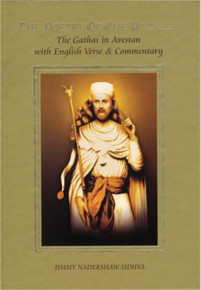
The Poetry of the Prophet — The Gathas in Avestan with English Verse and Commentary by Jimmy Nadershaw Sidhva. Published in 2010 by the author, 140 Backbay Reclama- tion, Bombay 400021. Pp: 489.
It was in 1998 that the genial radiologist and comedian par excellence first emerged with his initial interpretation of the Gathas of Zarathushtra in English verse — The Reli- gion of Asho Zarathushtra. The present volume takes Dr Jimmy Sidhva’s evolution and love of scholarship further with a lucid paraphrase accompanying each verse of the five Gathas, duly trans- literated and followed by a rhythmic translation.
Beset as the world is currently by environmental issues, the plight of Mother Earth in that far away time, "Torn apart am I by anger and aggression/ Violated am I by rapine and oppression” rings familiar. We read all the time of the increasing carbon content in the steadily warming atmosphere, the fight for min- ing rights and the degradation of the earth and its vegetation. Could pre- Zarathushtrian times have created as much havoc? We wonder. And would the current phase of destructiveness lead to the arrival of another messiah?
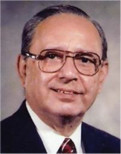
Dr Jimmy Sidhva: a gift for words
In the accompanying commentary Sidhva notes, "There is a tradition which maintains that whenever there is a pre- ponderance of evil on Earth, the Su- preme Lord sends a savior through His Divine Grace.” He goes on to quote a similar verse from the Srimad Bhagvata, "The Earth oppressed by schemes of princes proud,/ Leagued in their might with countless Demon hosts,/ Bowed down with this great burden, she ap- proached/ Her great Creator, seeking help from Him.” Sidhva attributes this scholarly comparison to renowned Avestan scholar Dr Irach Taraporevala, adding, "In answer to this appeal, we are told Sri Krishna was born.”
Not that Mother Earth is appeased by the appointment of Zarathushtra to the task of her defense: "My plea for support appears to have failed./ I am given a weak man who is only a pleader,/ When what I desire is a mighty leader!” So in the next verse Zarathushtra seeks from his Maker, "O Ahura, on me and my men do Thou shower/ Vital Force, and may Asha grant us Divine Power,/ That by grace of Vohu Mano, we can readily bring/ Joy to this world, which with happiness will ring!/ O Mazda, indeed am I morally sure/ That Thou art the Prime Source of happiness pure!” Sidhva, in his commentary compares this statement to the well known line of the Jasame Avanghe Mazda (kusti) prayer: "Ahurai Mazdai vispa vohu chinahmi (All that is good cometh from Ahura Mazda).”
Sidhva refers to the pivotal Yasna 30.2 which he says "embodies the two vital characteristics that make the Zoroastrian religion the Religion of Reason and the Religion of Choice”: "Listen well with your ears to my best teaching./ Consider with enlightened mind, all ye, before reaching/ A decision on the choice between two paths shown./ Each man to himself, his decision his own,/ Well be- fore the ushering-in of the Great Event/ Wake ye all, and spread this message I have sent.” In the Prologue Sidhva notes, "Zarathushtra emphasizes the monothe- ism of his religion, where the sole Su- preme Being, Ahura Mazda, has created conflicting Spirits only for the duration of the Creation. The Zarathushtrian doc- trine is thus purely monotheistic, with ethical and moral dualism.” In the course of his paraphrase of Yasna 30.4 he notes parenthetically, "the very meaning of the Avestan word for the soul, urvan, is ‘to choose.’”
In Yasna 30.7 Zarathushtra promises, "To the righteous man shall come Divine Power,/ On him Asha and Vohu Mano their blessings shall shower./
His inner self shall reach to ever increasing height,/ Strengthened by the warmth of Armaiti’s Light./ To them will he belong, as indeed to Thee,/ By success in his Trials, his soul set free!” Sidhva explains, "The man who follows the Path of Righteousness or Asha, will be rewarded by Ahura Mazda with the gift of Khshathra, the Divine Power. In addi- tion, the Amesha Spentas, Asha Vahishta and Vohu Mano, will shower their bless- ings of Truth and Love, respectively, on him.”
Yasna 31.6 should have an important bearing on the question of conversion: "Unto him shall accrue the Very Best/
Who being wise, will spread my Truth to the rest —/ The Sacred Word which to Perfection shall lead,/ Through Asha on to Immortality indeed!/ Thus shall the Power of Mazda pour/ Into him, through Vohu Mano, and increase evermore!” The author goes on to explain that the Sacred Word mentioned in the third line of this verse is the Ahunavar or Yatha
Ahu Vairyo which also stresses the importance of treading along the Path of Asha, indeed that the prayer is "much
older than the Gathas.” He adds that the first Gatha, Gatha Ahunavaiti is named in honor of Ahunavar. "It is not enough to just know about the facts of the reli- gion of Ahura Mazda, but it is also (a Zoroastrian’s duty) to spread the knowl- edge of the religion among his fellow- men,” he avers.
Verse after verse unfolds the many attributes of Ahura Mazda — all know- ing, all-seeing, just though benevolent, holding forth to human kind the neces- sity to follow the law of Asha, the love of Vohu Mano, the piety of Armaity in order to amass the ultimate wealth — a righteous soul ensured of a place in Garothman, by the side of the Maker: "Thou art indeed the Father of Vohu Mano./ Since the day I realized Thee, this I do know./ Thou art the Source of Truth — the Unrivalled/
Judge of the acts of all men in this world,” de- clares Zarathushtra.
The presentation of the ultimate scripture, one we all would like to know in terms understandable in 21st century lingo, without the cramping scholasticism of diacritical marks and convoluted reasoning, is what Sidhva seems to have achieved. It is es- sentially a work that ap- peals to the lay devotee though scholars may make a more criti- cal appraisal. To read of Zarathushtra’s own dismay and fears in the face of total isolation — "To which land shall I turn? Where shall I go?/ Deserted by relatives and the people I know!/ No response do I get from those near me,/ Nor from evil tyrants who rule my own country” — is a human condition that at some time or other strikes one and all in smaller mea- sure. Later, in a more buoyant mood the Prophet declares, "The deceitful his own inner self doth mislead/ About the real truth of the Straight Path, indeed./ His soul will chide him and writhe in tor- ment/ when it cannot cross the Chinvat Bridge of Judgement./ For straying from the Path of Truth and Righteousness/ Through his own foul deeds and his tongue’s obnoxiousness.”
On several occasions Sidhva informs us how the relevant line of a stanza from the Gathas has been absorbed in our kusti prayers like the Kem Na Mazda, Ahura Mazda Khodai and Jasame Avanghe Mazda and even the Atash Nyaish, which we repeat without know- ing the direct connection with the Prophet. Also, in the Prologue as well as in the body of the text, Sidhva sets out the connections between the Gathic terms and the later, more familiar, Pahlavi ones. Thus, Asha Vahista or the Highest Righ- teousness, Truth or Asha is what is later revered as Ardibehest Ameshaspand; Vohu Mano or the Good Mind teaches love for all creation and is known as Bahman Ameshaspand; Spenta Armaiti, representing holiness and piety we know as Aspandard or Spandarmad; Khshathra Vairya or the Divine Power or Strength is our Shahrevar Ameshaspand; the di- vine pair of Haurvatat (Perfection) and Ameretat (Immortality) later became Khordad and Amardad.
In his Foreword to the book legal luminary Fali Nariman draws a parallel between Parsi Zoroastrians reciting their
daily prayers and King Claudius in Ham- let: "Claudius kneels and prays not so much for forgiveness for his rank of- fence of killing his brother but rather in the expectation that he will get away with it… (he then) rises from his unre- quited prayer saying, ‘My words fly up, my thoughts remain below:/ Words with- out thoughts never to heaven go.’ Dr Sidhva’s evocative presentation of each and every stanza of the five Gathas, in a language that we Parsis are familiar with, will now help us to match words with thoughts.” In the words of Kerfeh Mazda,
"Atha Zamyat, Yatha Afrinami (May it be as we pray).”
The book is available free to whoso- ever wants it from the author (Tel:22022012/ 22043755). He welcomes voluntary donations to the 80G tax ex- empt Goolbai and Nadershaw Sidhva Charity Trust which he has founded in memory of his parents to disburse medi-
cal and educational help to the needy.
ARNAVAZ S. MAMA
◆ ◆ ◆
From the archive