
Events & Personalities
Battle for Jinnah House
As the "only daughter and sole heir” to Mohammad Ali Jinnah, Dina Wadia’s petition staking a claim to her father’s palatial property at Malabar Hill, was admitted by the Bombay High Court on August 23, 2010, reported The Times of India (TOI) on August 24, 2010. The nonagenarian, who resides abroad, moved the High Court three years ago challenging the Indian government’s notification defining Jinnah House as "evacuee property” and taking possession of it.
The government contended that Jinnah willed the house to his sister Fatima on May 30, 1939. Wadia and her lawyers have denied the existence of any valid will, nor has the government produced a copy of one. Joining in the tussle are Jinnah’s grand nephew Mohammed Ebrahim and his son, whose petition staking an independent claim has also been admitted by the Court. As per their counsel they, as Fatima Jinnah’s legal heirs, are entitled to the property, TOI reports.
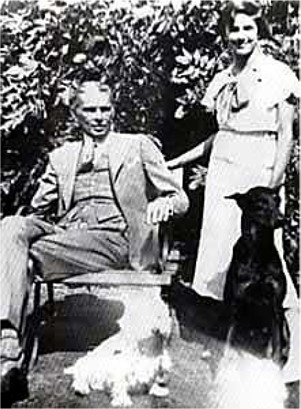
Mohammad Ali Jinnah with daughter Dina
After admitting the petitions Justices D. K. Deshmukh and N. D. Deshpande posted the matter for final hearing on September 23. They also permitted the government to carry out restoration work on the house, but "without making structural changes” as "the final use of the bungalow would be subject to the outcome of the petition.” Solicitor-general Gopal Subramaniam said the government, which he was representing, had decided to use Jinnah House as a South Asia Centre for Art and Culture.
Representing Jinnah’s daughter, senior counsel Navroz Seervai and solicitor Srikant Doijode explained, "The challenge is to a notification issued in 1949 by a custodian stating that the property was vested in him under the Evacuee Properties Act, 1949... The notification is not found in the official gazette.” After her last representation in January 2007, Wadia moved the court again in July that year.
According to the government scholarly books have recorded the existence of a will. It also produced in court the copy of a telegram sent by Fatima Jinnah on December 6, 1948 addressed to "Kher, Premier of Bombay” which read: "Informed Mr Jinnah’s property bequeathed to me is requisitioned and intended to be allotted to UK high commissioner. Kindly let me know if it is so. Request not to give possession until I see. Coming personally,” as quoted by TOI. According to the newspaper, the telegram assumes importance because Jinnah’s sister was still alive and treated as an evacuee in 1949, whereas he had died before the Act was passed and hence could not be referred to as one.
Daily News and Analysis (DNA) on August 4, 2010 reported that Wadia, mother of industrialist Nusli Wadia, knocked on the doors of the High Court after she received certain information through the Right to Information Act. Wadia’s legal team, which includes senior counsel Fali Nariman, argued that Jinnah left no will, that the government had wrongly declared the heritage mansion as evacuee property and that as Jinnah was a Khoja Muslim, the Hindu personal law applies to his estate and not Muslim personal law under which the property of someone who dies intestate goes to his/her siblings.
◆ ◆ ◆
From the archive