
Cover Story
The nightmare and the navjotes
The Maloo-D’Souza family went through a week of agony to perform their children’s navjotes
"After all the sleepless nights over the past five days, I just slept,” said Roshni Maloo when asked if she had recovered from the harrowing experience of performing her two children’s navjotes despite pressure and veiled threats from members of the orthodox lobby. Her husband Savio D’Souza is a Catholic. The reception on April 16, 2010 went off without any "problem,” said Maloo as the police had cautioned the opposing Bombay Parsi Punchayet (BPP) trustees and others that if they assembled at the Bandra venue or created any ruckus they would be arrested for disturbing the peace.
As the Catholic priests who run the St Joseph Primary School grounds where the event was held decided against any religious ceremonies being held at the venue, the navjote ceremony was performed the same morning at the family’s Sleater Road residence.
"The institute was pressured” and warned that the hosting of the function would create "communal disharmony.” Hitherto, only Zoroastrian ceremonies were permitted on the grounds; for all others, including Christians, only receptions were permitted. Henceforth the Sisters have stopped all religious ceremonies at the venue, explained Maloo to Parsiana on April 19 at her residence. The Sisters were "so much in support,” of the event and said even if a disturbance was created, they would not back out of the reception. The principal said she would "never cancel the function” and was even prepared to stand at the gate to welcome the guests. The nuns held two special prayers on the day at noon and 4 p.m. for the function’s success, says D’Souza. "It was really thoughtful of them,” adds Maloo.
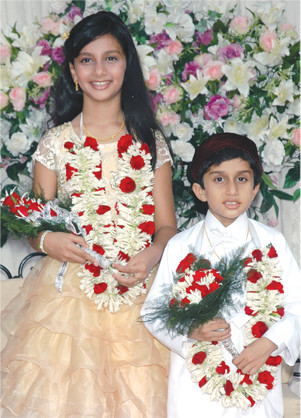
Zinatra and Tushar D’Souza at the reception: After much worry and fear, a happy ending
Photo: Glenn Dodd
The appointed caterers of the grounds, Cheron Caterers, stand to lose as Parsis may shift their functions elsewhere. But despite the possible economic loss and the pressure put on them to withdraw from the event, caterer Sohrab Zorabian held steadfast. Zorabian says, "There was pressure in a way but no threats.” BPP trustee and the World Alliance of Parsi Irani Zarthoshtis (WAPIZ) founder trustee Yazdi Desai sent him a text message stating "please understand that the function is to celebrate an irreligious act and God will never forgive you. I humbly request you to cancel the whole function. Please. You will get manifold blessings. Kind regards.”
Video and photography professionals, Armaity and Rashid Bamanbehram opted out of the assignment, returning Maloo’s cheque two days prior to the event. When asked why they backed out, Rashid told Parsiana he saw the write-up on the navjote in the newspapers and decided, "mané lafraa maa nathi parvu (I don’t want to get into any trouble).” He was concerned "ké laafo parsé (I’ll be slapped).”
Maloo felt if the Bamanbehrams were going to opt out they "should not have accepted the assignment in the first place.” Armaity had covered the inauguration of my shop. She knew very well my husband was a Catholic,” notes Maloo but adds the Bamanbehrams must have been subjected to "undue pressure. I have no grouse against her…my special thanks to the caterer who stood by me even after being pressured. Certain friends remain friends for life.”
Included amongst those friends are the Wadia brothers, Kerssie and Vispy, other members of the Association for Revival of Zoroastrianism (ARZ) and eye surgeon Dr Kuresh Zorabi. The family "received threatening calls from various sources. Opponents warned of a repeat of Sanjan (where a group of 40 or so Parsis led by BPP chairman Dinshaw Mehta and former accountant/secretary of the Surat Parsi Panchayat Soli Katpitia barged into a college run by Meher Master-Moos and assaulted a Russian Zoroastrian, Mikhail Chistyakov, who was undergoing a navar initiation ceremony).
"Day by day hooliganism is increasing” in the community, lamented Vispy Wadia. "We wanted to tell them ‘don’t think this is Sanjan. This is Bombay.’” Accordingly non-cognizable offense reports stating they were anticipating trouble were filed with the Malabar Hill (under whose jurisdiction the priest performing the ceremony, Ervad Khushroo Madon resides), Tardeo and Bandra police stations. Four people were named as potential trouble makers to the Bandra police. They were Mehernosh Fitter, Gustad Irani, Dali Mistry and Vispi Gandevia.
"A strategy”
Zorabi, a member of the National Congress Party (NCP) which currently co-governs the state of Maharashtra along with the Congress party, read about the family’s travails in the Mumbai Mirror of April 13, 2010 and contacted the Wadia brothers to ascertain the veracity of the report. He had a Tuesday night meeting with the family and the Wadia brothers "to work out a strategy,” explains Zorabi. They decided to approach the state home minister, R. R. Patil or "Abba” as his NCP party workers fondly refer to him.
Zorabi wanted to meet ‘Saheb (boss)’ that same night but as the Maharashtra Legislative Assembly was in session and sitting till late, they landed up at Patil’s residence the next morning at 8.30. Though the day was Ambedkar Jayanti and Patil was pressured with appointments/functions he met the group and on a letter that Maloo and D’Souza had written citing "certain groups of the Parsi community are trying to disrupt the function…hence we request you to give police protection,” he wrote a sentence asking the Deputy Commissioner of Police (DCP) for the zone to "please inquire and do the needful.” "We don’t want to disturb the law and order,” Zorabi quoted Patil as saying.
The group then proceeded to the Bandra police station where they were shown a letter from the BPP allegedly citing a "court order” banning the function. Examining the document Vispy Wadia found the so-called "court order” was merely extracts from the judgment of Justices Dinshaw Davar and Frank Beaman in The Parsi Punchayet Case of l909. Wadia pointed out the extracts that supported the D’Souza’s case. The judgment states that "Zoroastrianism not only permits but enjoins conversion.” This was a case of "protecting the constitutional rights of a child,” stressed Zorabi. Social activist Firoze Kotwal also approached the couple with an offer of help and filed additional complaints at the various police stations. He alleged that notice under section 144, 149 and others of the Criminal Procedure Code had been served on the BPP trustees that unlawful assembly of five or more persons in the vicinity of the venue would constitute a criminal offense. Mehta denied any notice was served on the trustees.
"We put them in their place. They deserved it,” enthused Zorabi. "You can’t do tinglebaji (needling) or bhaigiri (gangsterism) with everybody.” They thought "Sanjan Part II aiya karyé (do it here). Without the home minister in their favor they found it difficult to handle the scenario. They played very dirty. We had to place a police van outside Roshni’s house for two days. CID (Criminal Investigation Department) in mufti and a lady constable were also present.”
"I’m not trying to be a hero,” Zorabi explained to Parsiana. "I wanted to help these guys out” as people had threatened to "tear their (the children’s) sudrehs” (in Sanjan Chistyakov’s sudreh was torn by the mob) and wave black flags at the function. The opponents of the navjote had "met the principal and management of St Joseph’s School and threatened them with legal action.” The pressure was put till 4 p.m. on the reception day says Vispy "but they (the nuns) stood firm. They did not back down.”
"Farcical navjote”
Close on the heels of the navjote group, four BPP trustees Mehta, Khojeste Mistree, Jimmy Mistry and Armaity Tirandaz arrived at Patil’s residence the same day for a 12.30 appointment and met the minister half an hour later. Rumor had it they were made to wait three hours. "We were waiting for Jimmy Mistry,” explains Mehta. Patil told them the State would have to "get a legal opinion.” The trustees then proceeded to the Bandra police station where Mehta says they were informed a complaint had been received and that no breach of peace should occur. According to Vispy, the Bandra DCP said the legal opinion subsequently came in favor of the family. "Guna banat nahi (not a wrong doing).”
"There is no question of breach of peace,” Mehta declared to Parsiana. The BPP and the others who opposed the navjote were not going to create any disturbance. "We were not planning anything, no demonstrations. We wanted the police to ban this farcical navjote,” he averred. "What is the sense of having a navjote if you can’t go into an agiary or atash behram? It’s all being done illegally. Why all this hypocrisy. Will the children follow Zoroastrianism? This is just drama to get popularity and publicity.”
An article in the Afternoon Despatch and Courier on April 14 notes Mehta and Khojeste Mistree "have categorically stated that to perform the navjote of the progeny of such mixed marriages is against the tenets of the Zoroastrian religion, and is considered as sacrilege.”
According to the Davar and Beaman judgment in The Parsi Punchayet Case only children born of both Parsi/Irani parents or a Parsi/Irani father qualify to be Parsis. Anyone else who opts to have their navjote done becomes a Zoroastrian but not a Parsi Zoroastrian. The double qualification enables them to avail of trust benefits specified for Parsi Zoroastrians. This includes entry to fire temples, (the trustees, however, can exercise their judgment to permit others to avail of the benefit. In Delhi, for example, entry to the fire temple is officially permitted to children of Parsi women married to non-Parsis) community housing, scholarships and so on.
Fitter says, "We did not do anything. I did not oppose it. (But) I do not accept this navjote. This is 100 percent not proper. They (the parents) are fooling with the children.” And if a black flag protest was held what was wrong with that? he asks. One has a right to protest. "We’re in a democracy.”
Madon says he received threatening phone calls three to four days prior stating that the navjotes’ opponents "will not let you go (to the venue). We will break your hands and legs. They said they would take down my pugree and burn my jaamaa (priestly robes).” A complaint was filed with the Malabar Hill police station. The day before the navjote Madon and his son Jimmy spent the night at a hotel in case their exit from home was blocked the next morning. The Wadia brothers spread the story that the navjote had been performed a day earlier. On Friday (April 16) the Madons went to the house, performed the navjote and returned home in the evening. Two other mobeds who were to participate in the ceremony were "scared” and asked to be "excused.” His wife Farida was also fearful and startled every time the phone or the door bell rang. But as Madon says, "We were firm. Even at the risk of our lives.”
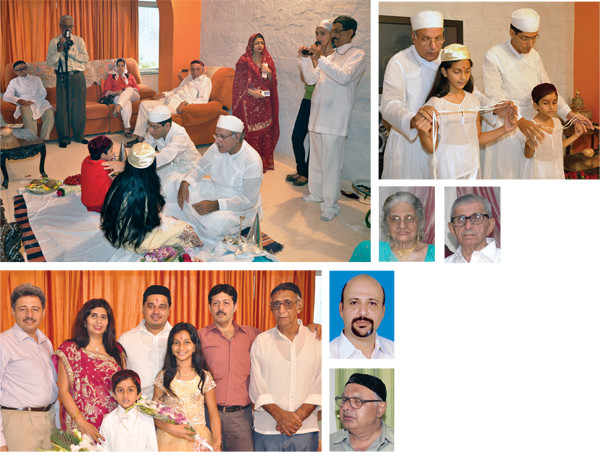
Clockwise from top left: Ervads Khushroo and Jimmy Madon performing navjote of Zinatra and Tushar, Pesi and Piloo Maloo, Dr Kurush Zorabi, Firoze Kotwal, Bapoo Malcolm, Vispy Wadia, Zinatra, Savio D’Souza, Tushar, Roshni Maloo and Kerssie Wadia Navjote photos by Minoo German
Chhaiyé Hamé Zarathoshti
"Why only for our navjote” all this opposition? asks Maloo (see "Innocent children”). "I’m a Parsi Zoroastrian. I’m with the community. The children were not converted. They are born into our family.” She alleges a section of the extended family attempted to settle past scores. She notes that the high priests sanctioned industrialist/philanthropist Neville Wadia’s navjote. The trustees alleged we performed the navjote "for the sake of acquiring trust property. I have never claimed anything.” She notes her grandfather Darabshah and her grand uncle Kaikhushroo Bhoot were the famous Parsi caterers and had donated large sums of money to charitable causes. Her family has two apartments, a travel agency and a shop. She herself is invited by the BPP’s Holiday Programme for Youth to talk on entrepreneurship. "The trust has nothing to do with religion. God gives you your parents but everyone has a right to choose their individual spouses,” she stresses. She questioned the logic and views of the high priests. "Why this gender discrimination? Why these double standards?” The high priests though, she concedes, "are opposed to both the men and women marrying out...
"What is a navjote? Children telling God we love you. As it is nobody goes to the agiaries and yet you are stopping two small children. Who gives them the right? What is the BPP doing about Parsi Zoroastrians not wearing the sudreh and kusti? In my house during our periods we sit separately.” In the BPP trustees’ houses "do they sit separately? Every day loban (burning of wood and incense) is done in my home. Every Avan mahino (month) we go to the sea and also pray at the well. Not a single day have we missed. Even the beggars near the Taraporevala Aquarium know my children by name.
"The children excel in everything. My daughter always gets a first prize in elocution. A time will come when the Parsi community will want to associate with her name. She has performed in 31 commercials. For causes like polio or social causes she participates without charge.”
Zinatra says she was "scared and worried (but) very happy to have my navjote done.” Though the fifth grader says her favorite subjects are art, craft, physical training and elocution, she says she wants to become a doctor as does her younger brother.
"It’s not their wish” to become doctors, says the mother, "their grandfather keeps telling them to become so.” Tushar, a standard two student whose favorite subject is mathematics, says the navjote was "nice” and that he enjoyed the event. He says he is happy to wear the sudreh and kusti. He even wrote a thank you poem to his parents for performing the ceremony. "He is usually a quiet and creative person,” says Maloo. "His Hindi teacher calls him a small kavi (poet).” Prior to the navjote he was very anxious and would run from room to room fearing an intrusion by the navjote’s opponents. In the family’s anxiety about the navjote celebrating Tushar’s birthday on April 14 was overlooked. His grandmother baked a cake in the house and when the boy remarked late at night that he had received "no birthday present,” his mother gave him a kiss and a hug and told him he would get a gift on his navjote. Zinatra played "Chhaiyé Hamé Zarathoshti” on an electronic piano for this reporter the evening of the interview.
"In religion there should not be any controversy,” says the children’s grandmother Pilloo. Terming herself "very orthodox” she had initially objected to her daughter marrying a non-Parsi. But after an eight-year courtship she relented and now says of her son-in-law "he does what Parsi boys do not do. Parsi boys do not follow all the religious rules (that she requires) the way he does.” Roshni says she and Savio "waited till they agreed.” D’Souza’s parents also were hesitant initially but then approved.
Grandfather Pesi notes the "decision for the navjote was not taken by my daughter alone but the whole family.” The mother gives birth and therefore it is natural that the children follow the mother’s religion. "This is not the first case of such navjotes being performed.”
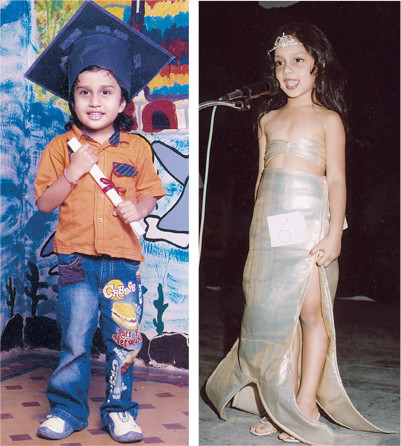
Tushar and Zinatra: fancy dress competition winners
D’Souza corroborates. "We discussed the matter. I travel a lot” as a result of which the children spend more time with their mother. "The environment (in the house is Parsi), everybody is Parsi.” Did the Catholic church ask the children be raised in their faith? "The church are the last people to interfere,” D’Souza asserts. "Even the Provincial had come down to show solidarity with the family.” D’Souza’s mother who resides in Jamshedpur also endorsed the family’s decision. His father expired some years ago.
D’Souza notes in the children’s birth certificates he had left the item termed religion blank. When questioned on this by the authorities he replied, "‘Right now they are following all religions.’ Now I can put in Zoroastrianism,” he says. The children are not baptized. Availing of Parsi trusts’ benefits was of no consideration in performing the navjotes, he asserts. His children could have availed of a 50 percent concession from their schools as their father was Christian but they opted to pay the full fees.
D’Souza says at first he was skeptical of people offering to assist with the navjote wondering if they were truly concerned or just furthering their own agenda. The atmosphere in the house was one of fear. But as he and Roshni observed their supporters were with them all through the four days prior even fetching food and water for them while they waited at the various police stations to lodge their complaints.
The Jam-e-Jamshed of April 18 carried a full page advertisement from Maloo and D’Souza thanking "one and all who have contributed in making their children Zinatra and Tushar’s initiation into the Zoroastrian faith a grand success.” Amongst those specially singled out for praise are Zorabi and Patil. The others include Kotwal, Kerssie and Vispy Wadia, Ervad Khushroo Madon, Bapoo Malcolm, Darayus Malegam, Aspi Billimoria, Viraf Maloo, Keki Maloo, Zorabian, the school authorities and the Bombay police. The advertisement concludes with the line "Ahura Mazda never fails.”
◆ ◆ ◆
From the archive