
Events & Personalities
One crore for Parsis
Finance Minister (FM) Pranab Mukherjee’s modest budgetary allocation of one crore rupees for containing the population decline of small minority communities "wasn’t met with the raising of a Parsi peg or gongs resounding from Bombay’s fire temples,” wrote journalist Bachi Karkaria in The Times of India (TOI) of March 7, 2010. "A community that controls enough trust funds to help the country out of fuel price hikes doesn’t need the FM’s rupees one crore,” she added.
In agreement with Karkaria is writer and playwright Meher Pestonji who told TOI: "We are a fairly well off community and couples choosing not to have babies or marry late is a lifestyle choice.” However, Dr Armaity Desai, member of UNESCO’s PARZOR project reacted with: "It’s a ridiculous amount only allocated for namesake. I would have expected an allocation of at least 10 crore for minority communities,” TOI reported.
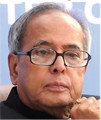
Pranab Mukherjee: inadequate allocation
In an accompanying article in the same issue of TOI Nauzer K. Bharucha wrote: "The community that’s given India some of its best lawyers, musicians, industrialists, philanthropists and bankers is at the crossroads today... Parsis are a minuscule 0.01 percent of the Indian population. How long before they disappear altogether?” He also referred to the Bombay Parsi Punchayet run fertility program under the stewardship of Dr Anahita Pandole which resulted in "just 28 births a year on average over a six-year period. Altogether, 526 couples have availed of the scheme. It has contributed to a 10 percent average annual increase of the Parsi population.”
Parsis are one of the five nationally notified minorities, their numbers estimated to be 62,000, which TOI dated February 28, 2010 describes as "a threatening drift toward extinction.” Solutions have proved elusive and not much is known about what can be done to check the declining numbers. Even though the allocation of one crore is obviously inadequate, and there is no clarity on how the government plans to go about this onerous task, "its intent seems strong,” reports TOI. "I really cannot say how we can help,” minority affairs minister Salman Khursheed admitted to TOI, adding, "it is something the community must do by itself, but we can help preserve the heritage and culture which helps ease pressure on members.”
Representatives of the community met Khursheed to discuss this but there were no definite suggestions forthcoming. Issues related to the population decline are "ticklish,” like exclusion of Parsi girls who marry outside the community, high divorce rates and a rapidly aging population. Rather than speaking about the dwindling numbers, the representatives dwelt on faith related matters such as last rites and non-availability of priests which discourage followers. With the disappearance of vultures the Towers of Silence have become impractical and the option of burial is compounded by lack of space for cemeteries. Also, Parsi students face difficulties in securing admission to educational institutions, many of which, ironically, were founded by their forebears.
Karkaria argues that mixed marriages are almost inevitable and many individuals abroad have dropped the "Parsi” label, preferring to be known as "Zoroastrians.” She writes: "We are in a Catch-22 situation. Keep our fiercely protected racial purity, and we lose the numbers essential to viability. Pump up the numbers with conversion or intermarriage, and we must dump our distinctive identity. The increasing diaspora is perforce coming to terms with one verity: the Parsis as a race may have to be sacrificed on altered reality, but their religion, Zoroastrianism, will undoubtedly survive.”
◆ ◆ ◆
From the archive