
Religion
Calendrical calculations
Each civilization had to work out its own system of corrections so that the calendar remained in conformity with the sun, stars and seasons
When Zarathushtra proposed, in effect, an eight-hour work day (Ys 44.5), little could he have foreseen that his far distant followers would have tangled up the most straightforward of indications. Living amidst a society of pastoralists newly come to agriculture, it seemed only right that he should instil some direction into their activity and rest cycles — eight hours of rest and the remainder for prayer and play. Their work was seasonally committed and depended naturally on the sun’s annual journey across the zodiacal constellations.
Accordingly, Ys 44.3 invokes the wonder-worker who arranged the course of the sun and stars, and the waxing and waning of the moon. Stanza 4 is shot through with deep significance for our argument: "Which artificer held up the heavens from falling upon the earth below? Who created the waters and the plants? Who yoked the twin movers of wind and clouds.” It is Ahura Mazda, indeed the Creator (datar) of everything.
Thus pastoralists, agriculturists, and wonders of nature obligingly come together to support our religious calendar. All initially followed a luni-solar system of annual time-reckoning whereby the moon’s complete cycle made up the month, but the sun’s slow journey across the 12 star patterns took rather more than 12 lunar months of 29½ days each by 11 days and a bit. It is this quarter-day "bit” that has caused calendar problems throughout the ages: each civilization which followed the solar reckoning had to work out its own system of corrections to conform with sun, stars and seasons.
Not all attempts at precisely regulating time by the sun met with universal approval: the Ancient Egyptians long refused all corrective reforms, shunning them as "Greek.” In 1752 in England, when the double move was enforced for suppressing 11 days to accommodate the changeover from Old Style to New Style, and relocating New Year’s day from March 25 to January 1, riots broke out in Bristol where several people died. In Hogarth’s London, his cartoon of a populace clamoring "Give us back our eleven days” was certain not to have eased tensions.

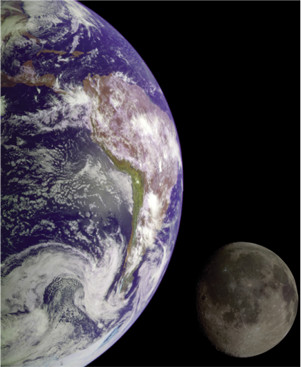
The course of the sun and stars Photo: solarsystem.nasa.gov
With the Parsis we enter a world of confusion and subterfuge. The confusion arose from ignorance of our Pahlavi calendrical texts where scientifically well-equipped priests had painstakingly put together the facts of the Sasanian calendar with their soundly based recommendations. They headlined these under Sal-i denig (religious calendar) in the Bundahishn’s 25th chapter, with ancillary ones for the gahanbars. Of great importance too are two chapters, concerning the solar and lunar years, from Book III of the Denkard — again priest-authored — detailing intercalation modes, their reasons, and the socio-religious imperative of a fixed calendar to precisely sign-post festive observances.
Parsi subterfuge is evident through mind-boggling denials of our commentarial texts bearing on Mazdayasna. What is undeniable is that the majority, being largely urbanized, no longer follow pastoralist and agricultural occupations; and that we delight in pointlessly arguing issues that impact directly on our prayers of whose sacrosanct language and content we understand almost nothing. Our prayers and festivities are consistently mistimed, mismatched, wrongly dedicated (contradicting our Si-rozas), and rendered ineffective because they conflict with their precisely located time-lines. Our untimely muktads, paravs and jashans are cases in point.
Just as our 12 months are arranged with 30 days each, the five days remaining are listed as the good pentad of the five Gatha days. Carefully placed throughout our religious year are the six gahanbars each of five days’ duration. Of these, the Maidyoishema and the Maidyairya, respectively "mid-summer” and "mid-winter,” are derived from the two observable astronomical indications of summer and winter solstices — the longest and shortest days of the year. Looking south at noon, the sun stands highest and lowest above the horizon on these days, pointing us to the religious importance of Rapithwin(a).
Rapithwin is the second gah, or watch of the day, that extends from 12 noon to mid-afternoon (3 p.m.) during the seven months of "summer.” Learned priestly tradition fixed these from roz Hormazd of mah Fravardin to roz Anagran of Mihr mah — March 21 to October 16 of the Common (Universal) Calendar. During the remaining five-month "winter” period, this Rapithwin gah is withdrawn and a double Havan (sunrise to 3 p.m.) reduces the five gahs to four. These universal dates signal the omission of this gah from our prayers. Crucially, the priests of yore determined funerary rites by this reckoning, having tabulated (in Shayast, Ch XXI) the varying lengths of noon-day shadows to assist their exact ritual observances.
Rapithwin plays a crucial role in our calendar(s) precisely because it acts as "control” over solar movements. For this very reason we have its entry and departure Afrin (blessing; benediction) for Rapithwin, and for no other gah. Its welcoming-in recitation on Ardibehesht roz (March 23) and not, as religiously prescribed, on roz Hormazd (March 21), has been glibly explained that the priests are too busy with the Jamshedi No-ruz to fit in this Mazda-arranged solar event — a subterfuge to conceal ignorance of this injunction! Its true timing is clarified with "As the southern wind advances to enrich this material world, to bless it and progress it, so too will the pious reciter (of this Afrin) reap its rewards!” Right timing remains of universal and beneficial importance.
Lunisolar influence on calendars
It is, however, the gahanbars that most benefit from such punctual observances. Their very names, with exact fixed dates (Bundahishn, Chapter 1) indicate when they are to be properly celebrated. Our two aberrant calendars of the Shahanshahi and Qadimi factions ignore these completely, stubbornly following vague indications and making a nonsense of their pious functions. The Afrini gahanbar, similarly consecrated by priests, stresses appropriate festive offerings to reflect their seasonal availability.
The Common (fixed) Calendar dates for the six religious gahanbars are: Maidyoizaremaya (mid-spring): April 30-May 4; Maidyoishema (mid-summer): June 29-July 3; Paitish.hahya (harvesting): September 12-16; Ayathrima (transhumance: bringing-in of cattle from summer pastures): October 12-16; Maidyairya [mid-year (from spring beginning March 21)] December 31-January 4; Hamaspathmaidaya (time of bestirment: preparation of land for agricultural work): March 16-20. Their timely observance at fixed periods is crucial (Shayast ne-shayast, XII.31). (Ancient India recognized six fixed bimonthly seasons, again for religious purposes.) The onset of spring, at the vernal equinox around March 21, was commonly seen as the start of the Zoroastrian New Year, albeit in the name of the non-Zoroastrian Shah Jamshid! (A plausible case was made for a New Year commencement at roz Atar [Fire] of mah Dai/Dadhv/Datar [Mazda], on December 24 when fires were lit to especially commemorate the steady climb of the sun from its lowest point along the noon-day meridian, but major complications let that enterprise quietly fade!)
Concerning intercalations, the insertions of days or months to rectify the calendar, precisely to prevent too serious a drift backwards of the seasons with their associated gahanbars, we have the authority of the Denkard (our "Mazdaean Encyclopaedia”), Book III, Chapter 419. Two calendars are presented: the first, uncorrected, shows only the 365-day type; the other shows the argumentation for the quarter-day addition. Here are some pertinent extracts which may help focus some priestly minds on the acute need, long suppressed, for a proper system to bring our religious calendar to its proper functioning:
The corrected calendar has hours advancing from year to year which were then totalled and added as one complete day. These annual quarter-days plus a slight fraction became too noticeable to ignore. "The beginning of the years, months and days is (calculated) according to the table of the stars, as are the horoscopes of men. / The chronology (sal-mar) of kings and years since the Creation, are matters for mathematicians. / The times fixed for contracts and enterprises are linked to the calculated year, and should not be dislocated or disturbed for the masses. / If among the people the calculated year becomes dislocated with regard to its place, then much order is confused in the world.” The mandate for intercalation is clear.
Daily tasks are regulated according to the four seasons which are linked to the movement of the sun across the zodiac. The year begins in spring when the sun reaches the point of Aries. Failure to keep to the proper seasons leads to neglect of the proper times for seeding, sprouting, growth, ripening and maturing of grain and crops. Also disrupted are the times of movements of pastoralists, the remove of kings and courts to and from the provinces; voyaging from the change of trade winds. Most importantly for urbanites are seasonal observances (gahanbars), unperformed religious rites which are now properly maintained by calculation/intercalation. All of these are authorized by rulers and their adviser/priests, for the benefit of the people.
Intercalations are listed: one day every four years (the quadrennial method followed by the universally adopted Common Calendar); 10 days in 40 years; one month (30 days) in 120 years; five months in 600 years; one year in 1,440 years. The one-month-in-120-years is significantly given again, followed by a warning against use of the lunar system which, elsewhere is repudiated for having confused summer with winter — a clear reference against the new-fangled unintercalated Islamic calendar. The point about the five-month upscaling is that no intercalations are permitted after 600 years. That scaling up was evidently a purely arithmetical exercise.
By a great irony, a month’s intercalation had been made in Iran in 1006 CE, the year 375 AY when the five Gatha days were moved from the end of Aban to Spandarmad where they now stand. That intercalation was not universally approved; the Parsis in India had, however, agreed to it and went on to intercalate a month 120 years later in 1126 CE — the Iranians did not follow suit. In 1720 CE, 594 years later, the Kermani dastur Jamasp (Velayati) visited the Parsis and pointed out the month’s discrepancy. There was no follow-up to the Parsi instigated 1126 CE intercalary month, but in 1745, on being convinced by another visitor, Jamshid, a lay astrologer from Kerman, the Parsi faction of the Qadimis split away from the majority Shahanshahis amidst much rancor, violence and even fatalities. The 600-year ruling had by then expired, but the fact remained unexplained why the Parsis had arbitrarily ceased their intercalations altogether after 1126 CE.
Less noticed was that in the 9th century, Zadspram, junior brother to the great Manushchihr, Dastur of Pars and Kerman, had clearly opted for the quadrennial system, and furthermore had divulged that during the 5th century CE, the Sasanian priests had thought it necessary to intercalate eight months all at once, suggesting that 960 years had elapsed since the last insertions! Evidently the one-month-per-120 years’ rule was neither followed nor enforced through Parthian and Sasanian times, and the unexplained 600-year limitation was added well after the downfall of the last Zoroastrian dynasty.
With these changed perspectives, it is hoped that good sense will prevail amongst the pious and the priestly to recognize that our prayers — from gahs to gahanbars — should once more be brought into line with our religious and commentarial texts. They were priestly productions; let us sincerely pray that our modern-day clerics will, with the benefit of hindsight coupled with true knowledge, now reproduce and reinstate our ancient cultural values and religious precepts. There was no disparity between the "civil” and "religious” calendars, just as there was no conflict between reason and religion in the minds of our priestly forbears for whom their science had grown in the shadow of the Temple.
(We cannot delineate here the calendrical adjustments for our Antipodean hamdins residing in the southern hemisphere for whom the true Sal-i Denig becomes even more corrupted.)

Farrokh Vajifdar is vice president of the Royal Asiatic Society of Great Britain and Ireland. An author and editor, he is an independent researcher into Ancient Indo-Iranian culture, history and religions.
◆ ◆ ◆
From the archive