
Anjumans
A change of guard
A new president and honorary secretary take over the reins of the Nagpur and Kamthi Parsi Zarathushti Anjuman
"My aim as president is to run the Anjuman effectively, judiciously and profitably,” says Aspi Bapuna, the recently elected president of the Nagpur and Kamthi Parsi Zarathushti Anjuman. Seated in his plush suburban office in Andheri, Bombay, the 54-year-old chairman of the Bapuna Group of Companies headquartered in Nagpur spoke to Parsiana on May 17, 2007. Bapuna took on the Nagpur Anjuman presidency following the resignation of Edul F. Bhagwagar on March 20, 2007.
Bapuna said his first priority was repairs to the Bai Hirabai N. M. Mulla Dar-e-Meher. Major maintenance work on the agiary was last done in 1995-96, the agiary’s centenary year, when the Anjuman raised 33 lakh rupees from donations (of which 25 lakhs were used and eight lakhs were invested in fixed deposits), says Bapuna. It was "the best agiary in the country at the time,” states Bapuna whose father Dinshaw headed the Anjuman from 1978 to 2001. Aspi was treasurer at the time.
Due to non-Parsis being barred entry to the fire temple, "maintenance is a problem, How do you solve it?” says Bapuna. Hence a malfunctioning exhaust fan was left unattended for several years, resulting in the smoke damaging the wall paint. [Bhagwagar said in a phone conversation the fan was not attended to as the priest stated "havaa nahi aapvaanu atash né ("air should not circulate over the fire).”] The kebla is situated in the fire temple’s main hall.
The tentative estimate for the agiary repairs is expected to be around 10 lakh rupees. "We will have to bring money from outside. The corpus of the Anjuman will "remain untouched,” he adds.
Personally he believes that the fire is pure. "If a Hindu sees it how can it become impure?”
He says he favors the admission into the fire temple of the children of Parsi fathers and non-Parsi mothers once the navjote is performed. When told that this is the prevailing legal position and that the issue is over the right of children of Parsi mothers married to non-Parsis gaining admission, Bapuna said in Nagpur even the children of Parsi fathers were sometimes denied entry. He was not conversant with the legal aspects of the law but would study the pertinent judgments. He listened with interest when told about the proposed universal agiary in Goregaon on land donated by philanthropist Byram Jeejeebhoy. Bapuna’s daughter Kashmira felt "it was a beautiful idea.”
Referring to the management of the agiary, Bapuna notes the rates for the prayers are set by the Anjuman. The panthaky and assistant mobed receive a salary plus the income they earn from performing religious ceremonies.
"A dasturji’s work is tough. He has to get up at 4 a.m. and work till night,” says the president. Sometimes a devotee enters the agiary at the closing time and then sits and prays for over an hour and the priest has to wait. While there are those who cause problems, "few come and help,” he laments.
The present corpus of the Anjuman is around 80 lakh rupees of which 37 lakhs are invested in bonds and the rest comprise land, buildings, etc. An additional 11 lakh rupees was raised from sale of property, notes the Anjuman’s new honorary secretary, Shiraz Gimi in a phone interview.
The Anjuman has been in a loss of around one-and-a-half to two lakh rupees for the past few years, says Bapuna. "I want to put a stop to this.” He believes that "unnecessary expenses” should be avoided and that "running costs can be met” from the Anjuman’s regular revenue. The Anjuman collects around Rs 2.5 lakhs from rent and Rs 2.5 lakhs as interest from investments, he estimates. "Make your budget and do not spend over that,” he advises. He noted that when his father took over the presidency of the Anjuman they "started from scratch.” Five buildings were subsequently constructed.
His first aim is to make the Anjuman profitable. "We have to build up the funds of the Anjuman… We require funds for scholarships… Paisa badha ni paas chhè pan dil joié apvaamaa (everyone has money, you must have the heart to give).”
Referring to the earlier decision to rent out the dharamshala hall and land to non-Parsis for functions, Bapuna says the income was around Rs 15,000 for a function. But it cost a few thousand to clean up the mess made by the parties.
"As per our constitution it is not proper to rent it out to other than Parsis… all assets are for members of the Anjuman and for the Parsi community. The dharamshala rooms are also only for Parsis,” he notes. Regarding a plan to lease out part of the 18 acre aramgah property for commercial use, Bapuna responds, "The government has given the property for the specific purpose of burial… A hundred permissions” would be required for a change of user and then there is the danger that "the government may say this is prime property, give it back.” Only Parsis are buried in the aramgah. While nearly all Parsis opt for burial, one, Aspi Dadina who died in a scooter accident in the mid 1990s, was cremated. The prayers were performed by relatives and family friends as the priest at that time had refused to perform the ceremonies, recalls Gimi.
Bapuna says his own father "wanted his body to be donated to medical science after his death but his heirs were not in favor, telling him ‘ai soo vaat karoch (what are you saying).’”
In Nagpur non-Parsis are permitted to see the face of the deceased after the funerary prayers. When Dinshaw Bapuna died 10,000 to 15,000 people attended the funeral and "all wanted to touch his feet,” says Aspi. The elder Bapuna believed it was wrong to bar non-Parsis from viewing his face when he had spent his entire life with them.
Regarding attending the oft stormy Federation of Parsi Zoroastrian Anjumans of India meetings, Bapuna says, "If I’m free and if it is held at a convenient place and if there is something of substance,” he would attend.
"Where are the dasturjis in the Federation?” he questions. He believes without the high priests’ involvement, many of the community projects "will never be successful… If the meetings are going to be rowdy, if (people are) egoistical then what is the point of attending as a silent spectator?”
The majority of the 600 or so Parsis in Nagpur are elderly. "We are becoming extinct in Nagpur… young people are running off to other places. Three to four flats are lying unoccupied.” Nagpur is the second greenest city in India and one of the cleanest, notes Bapuna. In a television interview with Times Now which focused on India’s new emerging metros, Bapuna termed Nagpur "a small town in a big city.” Eight daily flights connect the city, located in the center of the country, to Bombay, he added. Yet when Parsis are asked to come to Nagpur they are reluctant. "Do you get butter there?” one prospective Bombay bride asked, he notes. Bapuna does not favor "drastic changes but some change should be there. It should be balanced, so that we do not become extinct like the dinosaurs. The less controversy, the better.”
He agrees to the formation of a world body for the community. "Why should only India or Iran” have a say? "Parsis all over the world must join in. We want to hear the majority voice, not individual thinking alone.”
Regarding adult franchise being introduced in the Bombay Parsi Punchayet elections Bapuna states "that’s good” but he was apprehensive of those living in community housing having the vote. "Those elected to public office should be dedicated. There should be transparency. The trusteeship post is given in trust,” he elaborates.
Bapuna sees his own presidency "as a stop-gap measure… until someone competent wants to come.” He notes he was a reluctant candidate but agreed to stand only because people pressured him to do so and the Anjuman wanted him in office.
Population drop
There are "no new Parsis coming to Nagpur,” bemoans Gimi. Gimi along with Bapuna was elected to the post at the Anjuman meeting on March 31, 2007. The Nagpur Parsi population has dropped to around 560 in 2007 from around 617 in 2002, he notes.
Gimi has served the Anjuman as a nominee from 1990 and was chairman of the Centenary Fund Raising Committee that raised Rs 33 lakhs. "We want to slowly build up the corpus,” he says.
When his father, Jal, a former vice-chancellor of Nagpur University, died, "everyone was allowed to come in” to view his face after the geh sarna prayers, notes Gimi.
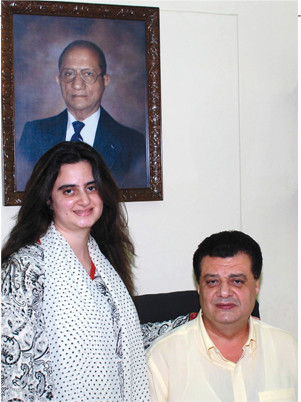
Kashmira and Aspi Bapuna with portrait of Dinshaw Bapuna
Gimi believes that Federation meetings are "a waste of time” judging by the reports he has read, mainly in Parsiana. "Maybe I’m being unfair” not having attended a meeting but they appear "to be occupied with infighting.” He also felt that the restriction on the number of delegates attending from an anjuman was unjust.
A keen sportsman, the former Merchant Navy officer is president of the Nagpur Parsi Gymkhana, the "small brother of the Anjuman,” as Bapuna describes it. (Bapuna is the only "super patron” of the gymkhana while his son, Jamashp, is the captain of the cricket team.)
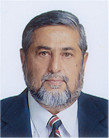
Shiraz Gimi: long serving
"Stand on our own”
Bhagwagar was keen the Anjuman "generate its own resources.” He says he did not want the Anjuman to "go around with a begging bowl” raising funds. "We should stand on our own feet.” This was the rationale behind renting out the dharamshala hall even if it meant "bending the rules” a bit. But he admits there was "a lot of noise” and inconvenience to the dharamshala occupants.
During his tenure a 1,00,000 liter underground water tank was constructed for the residents of the anjuman buildings, the aramgah wall was built courtesy funds donated by the World Zoroastrian Organisation, new bathrooms were constructed for the dharamshala hall, amongst other things. His attempts at generating resources enabled the Anjuman to assist those in need of medical and scholarship help.
"Things were going so smoothly,” he states. The problem started with the orthodox-liberal divide after one or two out-of-town guest speakers started the rift. The controversy over the formation of a world body saw hostilities come out in the open at the Federation of Parsi Zoroastrian Anjumans of India meetings with some committee members openly taking sides without the Anjuman’s concurrence.
Bhagwagar served the Anjuman since 1976 completing three terms as vice-president before becoming president. His father Framroze also served as vice president for a number of years, he notes.
Though he had been reelected as president in March 2007, two candidates he supported for the posts of vice president and treasurer lost ("one by only 40 votes”). "I left on principle,” he said. Several people approached him to reconsider his resignation and also that of the honorary secretary Yezdi Bhagwagar who supported Edul’s candidates but he refused to do so saying it was a matter of principle.
"I enjoyed every minute” of my tenure, he says. "I have no regrets.”
◆ ◆ ◆
From the archive