
Readers' Forum
Memories of Mehera
A void is left by the death of a loved one, but also a sense of fulfillment. My aunt, Mehera Jussawalla, died on October 4, 2006. All those who knew her have been enriched by the value we inherited from her.
In her late teens, she was taught by Rabindranath Tagore at Shantiniketan. I was awed listening to her experiences of exploring beauty, learning from nature and celebrating its abundance through the arts. This found expression in all that she did. There was an insight in the way she did batik paintings; an arrangement of leaves, brass pots on a window sill took on a new life.
Her work was her very being. She had trained as a nurse in the UK. One of her physically challenged patients told me, "She looked after me as a mother.” She cared deeply. Being large hearted, she was unaware of her own generosity and how she had transformed the lives of those around her. Like nature, she gave freely and silently. She did voluntary work at the Women’s India Trust (WIT). Her designs and creations live on.
Her openness, her refinement, is what makes her rare. But she was so self-effacing that she did not know the enduring value of what she has given us. So I write this letter to say "Thank you.”
ANAHITA DEVITRE
Mehera Jussawalla, or Aunty Mehera as I called her, was understanding and sympathetic toward people who were not as evolved as she was, being kind, generous, helpful and without ego.
Aunty Mehera studied and worked as an artist at Shantiniketan and has a number of paintings to her credit. She made clothes for the poor and handicapped. But her talents and resourcefulness were subordinated to her devotion in caring for her husband and raising her two sons. Her husband, whom I knew and respected equally, was an outstanding naturopath who worked hard and long with little regard for material reward, though the latter was never in short supply. Mehera came to terms with his self-containedness and the rationing of his company.
Since her younger son Firdausi was my classmate in school and contemporary during our early days in England, I was privileged to know Aunty Mehera over a lifetime. She was welcoming, warmhearted, gently instructive and loyal. I remember clearly her oft-repeated assertion that in marriage true love is manifested by respect, kindness, politeness and cooperation rather than sensuality.
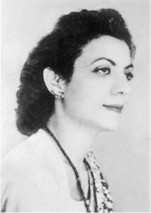
Late Mehera Jussawalla
When I was about nine years old, as the Bombay-bound Poona Express steamed out of Poona station, I was made to relinquish my seat because the wrong date had been written on my ticket. Aunty Mehera, who was with her husband on the train, saw me and arranged for me to squeeze in with them so that three of us occupied two seats. She also ordered coffee and snacks for me. I engaged them, especially the gentleman, in incessant conversation for the entire journey and if they found my child-like narrations and questions tiresome, they never showed it.
The second episode, three decades later, demonstrated her uniqueness. A few weeks after Dr Jussawalla, supported by his sons, struck my recently widowed mother and myself off his list of patients and sought no further contact with me because in a report to the committee of the hospital, I quoted his view of the inconsistent treatment my father had received during the last weeks of his life, Aunty Mehera met me and gave me moral support.
Though she honored the sanctity of marriage, Aunty Mehera was liberal enough to permit her sons to share their rooms in her apartment with their European girlfriends during the 1970s when such happenings were out of place in conservative India. Her friends were amused to learn that she told her son’s fiancé: " If you treat my son as a king, I will treat you as a queen.”
KAIKHUSHRU LAM
◆ ◆ ◆
From the archive