
General Articles
Achievers' advice
Three outstanding professionals address the Federation delegates
A gynecologist and two young entrepreneurs – both engineers by training – shared their perception of the community, and ideas to regenerate the momentum that it has lost in recent years, with the assembled delegates at the executive council meeting of the Federation of Parsi Zoroastrian Anjumans of India in Bombay on September 3 and 4, 2005 at the Banaji Atash Behram Hall. Dr Anahita Pandole, together with psychiatrist Dr Pervin Dadachanji, is in charge of the Bombay Parsi Punchayet’s (BPP) fertility clinic. Boman Irani, chairman and managing director of The Keystone Group, is a real estate developer whose buildings under the ‘Rustomjee’ banner have won high praise for the quality of their construction. Jimmy Mistry’s Della Tecnica Architects and Interior Designers is considered an international success story.
Dr Anahita Pandole
"The key to the management of infertility is diagnosis and treatment,” said Pandole, defining infertility as the "inability to conceive over more than two years.” She was quick to add that infertility "is not a disease. In 90 percent of the cases it is curable.”
Recalling how the BPP fertility program had taken off after a chance meeting with Punchayet chairman Minoo Shroff at the Third World Zoroastrian Youth Congress in Poona in 2002, Pandole stated that what it entailed was the documentation of the medical and emotional history of the couple seeking assistance, followed by an ultrasound examination and blood and semen analysis.
"More often than not, the consultation itself clears the problem,” she noted, informing the gathering that psychiatrist Dadachanji often had a decisive contribution to make. Some cases however may need intrauterine insemination and in some cases therapeutic surgical intervention may be called for to treat polyps, adhesions in the uterus and other similar conditions.
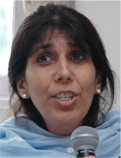
"The key to the management of infertility is diagnosis and treatment. Infertility is not a disease. In 90 percent of the cases it is curable”
Nearly 90 couples had contacted Pandole to date, 70 percent of whom were following up. Of these 27 had conceived, 10 had delivered – two sets of twins among them; there had been two abortions and one ectopic pregnancy, she informed the gathering. In eight cases intrauterine insemination had been called for, a treatment with 20 percent success rate all over the world, said Pandole. A telling figure she quoted was that 40 percent of the couples who had met her were in the 35-40 age group, a further 20 percent being over 40.The gynecologist had received calls from couples in Baroda and Hyderabad who she found needed In Vitro Fertilization when they had subsequently come to meet her. As the procedure is expensive, she said she had acquainted the BPP with their need.
"The BPP scheme has created awareness. Even newly married couples have phoned me saying they want to meet the gynecologist though they did not want children immediately. We tell them to come for a basic examination. If we can pick up on any problems at that time, it achieves quite a bit (in terms of saved time),” explained Pandole.
In response to a query regarding couples in the outer suburbs of Bombay who may need the service, Pandole noted that working women from Andheri and Vashi had made 8 a.m. appointments. "Distance is not a problem when people are motivated,” remarked Pandole. Some of them had learnt of the facility from the Parzor website, she added. "They normally say, ‘We’ve just come to talk to you’ but they are quite comfortable and come back when the program is set up.”
Asked whether she would be able to manage if fertility camps were organized in the mofussil, Pandole noted that the Jaslok Hospital had had two day camps when about 80 people came each day. "We would need a sonography machine. If the couple does not need to come (for advanced treatment) to a tertiary center like Bombay, we can provide a program to a local doctor to administer,” she noted.
Shroff is appearing before a Parliamentary commission asking what the Parsi community needs. Can we ask for help to widen the scope of this clinic?” asked Delhi Parsi Anjuman Trust president and member of the National Commission for Minorities Lt Gen Adi Sethna. But the query provoked no response.
Thanking Pandole for her devotion to the project Shroff acquainted the gathering with her civic minded and successful fight in the courts against the installation of advertisement hoardings on heritage sites and the decimation of trees to enhance their visibility. Heaping kudos on Pandole’s public spirited-ness Shroff added with a twinkle, "She can be quite a nuisance if she’s on the other side!”
Pandole may be reached on apandole@hotmail.com
Boman Irani
"An entrepreneur won’t expect any economic return without adding value. If not, he’s a parasite.” Guest speaker Boman Irani’s presentation on what it means to be an entrepreneur was an outstanding positive contribution at a Federation meet that would otherwise be remembered only for the confrontation and combat between the orthodox debunkers and the liberal administration. The fast talking real estate developer has demonstrated that the com-munity’s heritage of honest entrepreneurship is alive and well.
Irani sought to define what is entrepreneurship, what it takes to be an entrepreneur who he considers as synonymous to a leader, the qualities that spell success or lack of it and vignettes of great lives to inspire and to exemplify the characteristics he spoke of.
According to Irani any individual who takes full ownership of his or her actions and the way they affect the organization, takes responsibility for them, is displaying entrepreneurship. "If we have to rise (as individuals, as an organization), first say the change must begin with me. I must be able to ensure that all around me reach their goals. We are not here to be selfish. What (we) learn is of no use to (us) unless someone else also learns and takes it a step further… And I am speaking for all levels of business, not only ownership. (Each person) is responsible for his own growth and that of others around him. Often, people don’t know their own true worth or value. Someone has to tell them where to go from here. The entrepreneur is part of the team and at the same time a role model. He/she does the right thing and expects others to follow.”
To know or to learn what is right and practice it even when no one is watching, is a hallmark of leadership, said Irani, relating an anecdote from the youth of Mohandas Gandhi when he was still a long way away from his eventual nomenclature of Mahatma. According to Irani Mohandas’ father was a rich man who had charged his son with the task of getting his car to the mechanic for some minor repair before picking him up. The young Gandhi dawdled with his friends, took the car too late to the garage for the repair to be effected and facilely blamed the mechanic for not completing the job. The astute father ascertained the true story and walked all the way home, refusing to ride in the car, making the son squirm in silence as he drove the car home. It was a lesson in integrity that Mohandas never forgot.
Two other instances of entrepreneurial integrity offered by Irani were those of movie star Amitabh Bachan, a household name in India and of Sir Gulam Noor of the UK. When the company that Bachan launched became bankrupt, a lot of people who had invested in it lost their money. Resolutely the actor went back to his film career, turning in performance after acclaimed performance and taking on innumerable advertising assignments, earnings from all of which he has used to repay his creditors. Referring to the actor as "my ideal, my hero,” Irani noted, "His is a success story of integrity more powerful than any medium.”
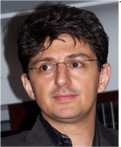
"You’ve got to know where you want to go. When I see land, I see buildings and happy families”
Noor, who has founded the largest Indian food products company in the UK, once had his products rejected as not meeting industry specifications and was told to dump the entire stock. There were those who pleaded with him to reduce the price and sell it off to mitigate the loss but Noor resisted the easy way out and dumped the product as instructed. Irani said the incident established Noor’s integrity in the market so that his company is today looked upon with respect by all concerned. "In the long run, only truth will pay. Short cuts don’t pay in the long run.”
The entrepreneurial mind sets itself benchmarks for performance, said Irani. "I cannot rise to the next level unless my subordinates outperform me, till my boys say ‘I want to be like my team leader.’ I am very successful as far as that is concerned.” Remarking that it was incumbent on a leader to continually improve himself whether by way of yoga, meditation, speech therapy or whatever, Irani noted that at Rustomjee, his construction company, they had begun by building 50 flats in two years. Next they built 200 apartments in two years. Now they build 50 buildings in two years. The end result is a "product of continuous improvement. I am blessed with a team who can take it on. Their response is ‘banéga (will do).’”
"We (entrepreneurs) need to think differently. You lose some, you win some. But unless you think differently, you’ll be like everyone else, you won’t have done anything of importance. A big shot is nothing but a little shot who keeps shooting. (Thomas Alva) Edison was asked how many times he had tried (before his light bulb succeeded). He did not stop with failure. We fail only when we stop trying, when we stop believing in ourselves. But when you lose, you must not lose the lesson,” cautioned Irani noting, "I have made mistakes, suffered losses.” Each time he said he had introspected: "What did I do wrong?” He imputed his eventual success to interacting with people, being "open to criticism on every single issue,” listening to what his team members had to say. To bring home the lesson that even the lowliest member of the team may have a giant contribution to make, Irani recalled that when the British administration collated land records, the collector never gave his order until he had asked his field officer for the true situation on the ground.
An entrepreneur has to be a contributor, said Irani, citing the instance of Mother Teresa who "hadn’t a rupee to her name but got a million people to contribute all they had” because she had a purpose and a program which could not be denied. "Find the purpose and the means will follow. When there is a leader, followers will keep coming.” Irani’s contribution has been the initiation of a program called Shiksha which trains "the undereducated in the Rustomjee vicinity,” teaches them to stand on their own feet because it is the "insecure who resort to grabbing power” by underhand means.
A quality that is inseparable from an entrepreneur is self confidence. "If I don’t have confidence in what I’m doing, you can’t have confidence in me,” noted Irani. It’s the vital element in all achievers and one instilled by sports gurus. "Look into the mirror and say to yourself ‘I’m the best’ like (boxing champion) Muhammad Ali,” he advised, because everybody wants a strong leader. "I tell myself I am the same sperm cell that fought its way to be born. I am born to win,” says Irani and cautions, "Hang out with people with a similar mindset. The negativists will leech you.”
Work on your strengths, delegate your weaknesses and prepare, prepare, prepare, advises Irani. "The Japanese prepare for nine months, then produce in a month,” a habit to which Irani ascribes their success and the often reverse story resulting from the Indian mindset when one rushes into a program without adequate preparation. Nor can a good job be accomplished without passion, "the intense concentration of a (marathon) runner” as he reaches the final lap of the course and sprints the last 100 m stretch. It sets the winner apart from the rest.
An entrepreneur needs a large measure of energy which he has if he is "blessed with good genes and nutrition.” But energy dissipates fast when one is doing something wrong or destructive or what one does not believe in, Irani says, adding, "You are building energy when you are doing what you like to do.” A major energy waster is fear of failure. "The agony of fear of failure is more than failure itself. If you never do something, you will never know whether it was or wasn’t the right thing to do. Not doing is the greatest risk you take.” He spoke of the determination of Nelson Mandela through his long years of captivity; of the enthusiasm of the Wright Brothers in pursuing their dream to fly in the face of traditional wisdom which insisted people can’t fly; of the vision of Disney World distilled by Walt Disney as he grew up in an attic with rats as roommates. "You’ve got to know where you want to go. When I see land, I see buildings and happy families…
But a good leader also has "refera-bility” by showing up on time, delivering more than he promises, being courteous and respectfully minding the dignity of even the most menial laborer. Nor is there shame in learning. "We are students all our lives. At 18 I knew everything,” laughed Irani, adding he was not so sure today.
It needed a direct question from the audience to overcome Irani’s reticence to talk about his personal life. A mechanical engineer who started out selling motor cycles to Iran and Turkey, a dip in family fortunes made it incumbent on him to sell family property, Irani presented a micro sketch. Thrown into the "big bad world of builders,” he learnt to differentiate between the flashy ones sporting a lot of gold and diamond accessories and the architects who designed for them. He was surprised to learn that "people were only interested in the money aspect when roti, kapda aur makan (food, clothing and shelter) are basic needs” and realized the tremendous opportunity in providing them. "I sold a piece of land but in the process I met 25-30 developers.” By 1996 he had founded the Keystone Group to venture into real estate. Two years later he says he decided to build a school. "Everyone seemed to be interested only in money!” His Parsi lineage revolted by crass materialism, he aimed at inculcating human values. At the Rustomjee International School he says he told his teachers, "I don’t mind if no one from my school becomes a doctor or a scientist or an engineer. But I will not have a single thug or cheat.”
Murzban Wadia wanted to know about the problems Irani may have faced with the underworld as well as the government. Irani’s response was clear: "There are clean lands and underworld lands. Those who live by the sword die by the sword.” But he admitted that it is a challenge to be overcome and true to his statement at the start of his talk – "from the question-answer session I stand to learn more”— he told Wadia, "If you think there are problems in my industry, ask JJ.”
Responding to Boman Irani, Dr Jamshed J. Irani, Kt, director of Tata Sons and former chief executive of Tata Steel, spoke of his experience in dealing with the Bihar Government in 1990-91 when Lalu Prasad Yadav had just come in as chief minister and was "making noises in Patna” vis-à-vis the Tata establishment in Jamshedpur. "I wanted to build bridges,” said JJ though there were those who tried to dissuade him saying "How long will the chief minister last? As you know, he’s been there ever since!” said JJ. When he met Yadav at the appointed time, JJ said he told him, "We will follow the rules. We will not ask for favors. But we will never bribe or give money under the table. We will help with the government’s program to dig borewells, aid social causes, etc. Lalu said, ‘Thik hai (OK)!’ He did not break that commitment.” When the Bharatiya Janata Party government came in, some attempts were made to seek bribes but they soon learnt that "going to Jamshedpur and asking for a bribe is like going to an Udipi restaurant and asking for non-veg food,” laughed JJ.
JJ’s intervention led Irani to note, "Half the ideas I have acquired are from books about J. R. D. Tata. He knew how to make a small person feel big,” and went on to recall how the head of the House of Tata had sat down on the steps of his house to chat with him when he was a young boy waiting for his parents. "Now I try to do the same,” Irani added quietly, illustrating what a role model can achieve.
Lawyer and Poona Parsi Panchayat (PPP) trustee Dara Irani spoke of the difficulties that the PPP had faced getting sanctions and approvals for their building projects and asked if bribing one’s way through was or was not part and parcel of the development industry.
Before Boman Irani could answer, JJ spoke of a recent Tata experience when they needed land to set up a new unit near Poona. The Tatas never bribe so they anticipated delays. The land, costing between eight and nine crore rupees, was not only sanctioned without ado but delivered in three weeks. "I was embarrassed because I had planned for the money in six months!” recalled JJ.
Information Technology entrepreneur and secretary of the Delhi Parsi Anjuman Trust (DPAT) Adil Nargol-wala’s experience, as he refused to agree to a government cut for the land where he wants to build his office, has been less than happy. With 10 percent of the cost of the property already paid, working from a tenanted office "where we are paying lakhs,” and a change in the government with the new incumbents demanding more, "we are losing money when we stand on principles,” said Nargolwala.
Former municipal commissioner of Bombay who then became chief executive of Tata Housing, Jamsheed Kanga recalled that Tata directors were shocked when JRD decided to go into the housing industry because of their perceptions of the unhealthy practices associated with it. Kanga quoted JRD, "If the Tatas don’t show that real estate development can be done without bribes, who can?” According to Kanga, it may take longer to complete a job without paying, but "beyond a point, they (the administration) have to provide what you want. By giving bribes we create an environment in which bribery and corruption pays. Be dhukka khao (make repeated trips) if necessary but keep the system clean.”
When Dara Irani insisted that the Tatas and Birlas can get away without paying because they have retired collectors on their boards, Boman Irani responded, "Don’t judge by action but by intention. If I need to say a lie to save someone’s skin, I’ll do it. Every coin has two sides. I believe we must look at the greater objective which is housing. We are not in a position to change the system but we try to reduce the number of openings, stick to the rule book.” Turning to Nargolwala he noted, "If I was you, I might have thought more about it. But we need people like you to slap them back. If I was put to trouble, I might not have toed the line, but if others are in trouble, I might do so.”
Thana anjuman president Rustom Cursetji said it had taken them a bit longer to get the required permissions when they had constructed community housing but they had managed without paying bribes. "By going to slightly higher levels of the hierarchy you find people who appreciate cleanliness,” he noted, adding, Boman Irani’s "lesson in entrepreneurship will stand us in good stead.”
Jimmy Mistry
"No success in material terms is worthwhile unless it serves the needs of my community and is achieved by fair and honest means,” said Mistry, marginally paraphrasing J. R. D. Tata’s famous words.
With a passionate belief in the inspirational strength of the consecrated fire, Mistry wants to rekindle an enthusiasm in Parsi youth to regularly attend agiaries. But first, these old centers of Parsi religious and social life have to be repaired, restored, rejuvenated and, most importantly, maintained.
There are 48 agiaries in Surat, 50 in Bombay, says Mistry, adding that he has adopted two for life: "Everything dealing with them becomes my responsibility.” Unhappy at the agiaries which have become defunct in mofussil areas, he says he is thinking at an international level when he suggests that other successful Parsi industrialists — like Rasna soft drinks baron Areez Khambatta of Ahmedabad — similarly adopt an agiary for life. Mistry himself oversaw and paid for the repair and renovation of the Rustomframna Agiary in Dadar.

"I am quite shocked at the way things go on (on the Federation floor).... Management perspectives need to be looked at afresh”
Brushing aside the traditional concept of philanthropy, "the right hand shouldn’t know what the left hand is doing,” Mistry says, "Unless the one who is doing something publicizes it, how can he go to anyone and ask them to do likewise? You can’t keep shut and get the community to generate funds. It’s only when people know what (karate specialist) Vispy Kapadia, for example, is doing for Parsi children that they will be inspired to do something themselves.”
Mistry who had arrived while an unseemly attack was launched on Sohrab Katpitia of the Federation’s defunct anjumans subcommittee began his address by noting "I am quite shocked at the way things go on. The Parsi community is here today largely because of Parsi entrepreneurs through the years… Management perspectives need to be looked at afresh. We need out-of -the-box thinking regarding the community dwindling, bickering. Mari gaya pachhi kai nahi thasé (once we are dead nothing will happen).”
Mistry sought motivation, career guidance for youth. He spoke of a Parsi Resource Group of likeminded young people getting together to make the agiary in each area the "epicenter for the community to re-grow.” Speaking of the need for financial and intellectual resources to come together, he called for specialists in the legal, graphics, media and such like fields of enterprise to come together. "We don’t need crores,” he noted, but the management of facilities by people capable of management. "Parsis who apply for jobs don’t even know how to write their bio data. Generation next will have little to look forward to except a few atash behrams and agiaries.”
Speaking of an out-married Parsi of modest means from Secunderabad who was unable to get his children initiated into the faith, Mistry said, " I managed to tell him that the navjote will be done in Hyderabad. Else we would have lost a living Parsi Zoroastrian and his kids. If he had had resources, the navjote would have been done.”
After the revival of agiaries and atash behrams to their "pristine condition” Mistry urged the adoption of mobeds. "We have barely 300 working mobeds. Can’t we take care of them?... Everyone wants a good standard of living. Who are we preserving corpus funds for?” Mistry’s unorthodox suggestion was the use of principal amounts for welfare and revival activities rather than limiting usage of trust funds to interest alone. Referring to the five children currently at the M. F. Cama Madressa in Andheri, Mistry urged, "Get something constructive done by the trustees…Get people working elsewhere to go back to the agiaries.”
In the discussion which followed Sethna invited Mistry to Delhi to see the Young Farohars aged four to 14 learning their religion as well as culture and the DPAT’s more recent program to get alumni youth back to revive their cultural roots with the object of matrimony. "Your agiary and dharamshala are beautiful. A lot more people in the community need to do what you are doing,” responded Mistry.
Mistry also proposed the transfer of impoverished farmers from Gujarat to Akola where the community is said to have arable land but few hands to cultivate it. He suggested the "packaging of agiaries” with a photograph of each structure, its mobed, his house together with an assessment of what it would cost to refurbish and maintain the institution and look after the mobed. Each agiary could then be presented to well-off Parsis to adopt. "If we only ask for donations, it’s not going to work. If we only take on Bombay and Surat agiaries, it is not an impossible task.”
When the usual stories of the inertia of Parsi youths, their attachment to their mothers’ apron strings, etc were related, Mistry acknowledged, "The only labor court notice I’ve received has been from a Parsi. The only employees who talk of (going home to) their parents are Parsis. Everyone of my staff works till 1 a.m. The fire in the (Parsi) belly is gone. We need to reignite it…Let there be humbandagi on Sundays. Let us talk of what attracts youngsters, an enlightened mobed who provides guidance…A lot can be achieved if there is an ‘adopt an agiary’ program…”
Someone threw a red herring: "Who decides changes in the religion? The mobed?” Refusing to be drawn in, Mistry replied, "No, there is enough debate in the community. Leave it on the back burner. It’s a big time manjan (headache). We are not concerned with it.”
Another detractor from the orthodox camp shouted, "If you cannot respect your dastur you can’t do anything.” It was an oblique comment on what Mistry had said earlier about an intermarried Parsi and his children. "You are diverting our attention to the wrong thing. We (the community) are like an ICU patient.We need oxygen right now. Let our numbers increase. Only the middle class and the poor are in trouble. The affluent get by,” returned Mistry.
"If something has to be discussed, it has to be discussed by specialists…One can’t be arrogant and not recognize priests who are learned. There are mobeds who are not, but we have to consider what the learned clergy has to say,” pronounced Khojeste Mistree who led the orthodox camp at the Federation meet. "I am not a qualified architect. I’m a mechanical engineer. But I am designing buildings and providing architectural solutions to India’s topmost businesses,” countered Mistry. While Kho-jeste Mistree persisted, "You have a team of architects…” Jimmy Mistry held his ground. "I’m not supporting the left or right. There are other urgent issues…”
◆ ◆ ◆
From the archive