
Events & Personalities
Critical juncture
At the "Critical Moment Conference” sponsored by the World Council of Churches in Geneva from June 7-9, 2005 there were two representatives from the Zoroastrian faith: Dr Homi Dhalla from India and Jehangir Sarosh from the UK. In his report of the proceedings Dhalla mentions that there were more than 100 participants from several countries and all religious backgrounds who had come together to consider how interreligious dialog might more effectively address our current critical moment.
Each day of the conference began with a spiritual reflection by a participant from different religious traditions. A chant or a song was used to express one’s faith. "Spiritual sharing is the way of showing respect for the diverse religious traditions,” mentions Dhalla.
Among the important issues discussed at the Conference were conversion, educational strategies and interreligious dialog and
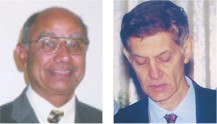
Sarosh (left) and Dhalla
collaboration. Participating in some of these discussions Dhalla sums up the sentiments of the speakers: Religious communities should reject the conversion mentality that has historically dominated both the Christian and Muslim traditions because of the complex issue raising tensions within and between religious communities resulting in violence and anger. A training program for religious leaders was advocated as also an exchange program (for students, teachers and future leaders) centered around personal encounters with people of diverse cultural and religious backgrounds so as to increase respect and understanding amongst communities.
With rising migration and the consequent spread of religious communities to different cultures the need for dialog to address religious and ethnic conflicts as also the prevailing fundamentalism was realized. As notes Dhalla, "Many who have participated in interreligious dialog have gained a greater sense of self awareness as well as learned more about religious traditions and made abiding friendships…Throughout the Conference participants stated that we must move from dialog to action.”
◆ ◆ ◆
From the archive