
Books
Family values
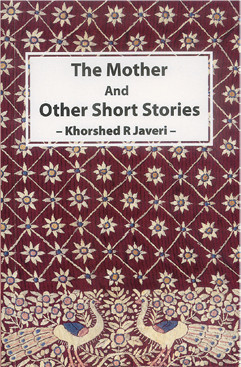
The Mother and Other Short Stories by Khorshed R. Javeri. Published in 2005 by Spenta Multimedia, 105/111, 81, Dr E. Moses Road, Worli, Bombay 400018. Pp: 132. Price: Rs 150.
The Mother and Other Short Stories by Khorshed R. Javeri. Published in 2005 by Spenta Multimedia, 105/111, 81, Dr E. Moses Road, Worli, Bombay 400018. Pp: 132. Price: Rs 150.
This collection of five short stories contains an essence that has surfaced after a long, long time. In today’s world where nothing that is either earth-shattering or immensely intense catches the imagination of the public, here we have something that features only common, everyday situations in the lives of simple people. And yet it is readable.
The author, Khorshed R. Javeri, tackles the neglected stories of simple lifestyles. She has selected good themes, though not necessarily unique ones. In fact they are an account of day-to-day situations with subtle emphasis on emotions, aspirations and the fears of the vulnerable. She strongly brings out traditional family values and old-world charm as seen from the eyes of a woman.
Her characters are generally molded in soft personalities who display more control and courage over their lives and emotions than perhaps the usual stormy and temperamental heroes and heroines of today’s novels.
The first story, The Mother, portrays the life of a woman who lives for others...typifying the life of a mother. It offers an insight into a mother’s mind, the fears and hopes of her family. It also exemplifies her place within the family, the center-point, around whom the rest flourish.
Jenny is a well composed story of a middle-aged professor who falls in love with a girl half his age. His absolute and pure love takes him through a journey of pleasure and pain, jealousy and loneliness, and finally complete bliss.

Soonamai’s Story could be termed as a sad yet inspiring one, of a simple lady’s dream being finally fulfilled. The fourth story, A Daughter Alas, talks about a matured and intelligent woman coming to terms with what life has dished out for her. It belies the belief of an average Indian that a daughter is a curse. In the final story, The Scorekeeper, a father hits back at his deceitful son-in-law for being unfaithful to his daughter and abandoning her.
In the foreword the author mentions that these stories may not appeal to one and all, and I tend to agree with her. Possibly some dialog, interspersed within the stories, would have enhanced this appeal greatly. Even then, it should have a special place in the bookcases of perhaps the emotional, the ones who still believe in strong family values, the ones who’d like to groom their children with similar thoughts, and most of all, the fairer sex.
J. P. Kerawala
◆ ◆ ◆
From the archive