
Events & Personalities
Dear kathi
This year the price of bawal has already seen an increase of Rs 700 per ton. By November 2004, the increase may be about Rs 1,200-1,500 per ton, cautioned Farroakh Govadia of Hormusji H. Sidhwa and Son, the only Zoroastrian wholesale supplier of this special wood that is used in fire-temples to keep the sacred fires burning perpetually.
Presently priced at Rs 5,000 per ton, Govadia remembers that in 1942 it was Rs 40 per ton which increased to Rs 100 in 1972. In another 15 years the price may escalate to Rs 10,000 to Rs 15,000 per ton, Govadia voiced his concerns in the Jam-e-Jamshed Weekly of October 17, 2004. Due to short supply of industrial coke which was previously used for furnaces, there is now a demand for unsplit bawal in the general market, Govadia explains the rationale for increasing prices. The demand for bawal wood is also from caterers, bakeries, crematoria, kilns and liquor stills. Considering that the fire-temples in Bombay require about 700 tons of bawal kathi annually (one agiary consumes nearly 7,300 kg of this heat-retentive hard wood which burns slowly without emitting any sparks or toxic smoke), "we are consuming kathi worth Rs 35 lakhs. This figure may increase to one crore rupees per year...Can we afford this increase,” questioned Govadia.
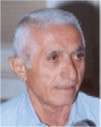
Govadia: "can we afford?”
Aware of the gradual hike in kathi costs which they buy biennially for their Mevawala Agiary in Byculla, the panthaky Ervad Parvez Bajan stated that until their stocks last they will not be affected by the sudden spurt in prices. He mentioned that nearly 50 percent of the kathi consumed is patronized by the devotees. In the absence of a Kathi Fund the shortfall has to be met by the panthaky who is expected to use it judiciously. There is no need to have a blazing fire in an agiary at all times, he points out. While a fire is easiest to tend in summer, the monsoons and winters require better care of kathi to ensure that a fire continues to smolder. Ervad Parvez Madon, the panthaky of the Shapoorji Jokhi Agiary at Godrej Baug is in a more fortunate position as the fire-temple owned by the Bombay Parsi Punchayet has its stock of kathi supplied by the Punchayet. In addition to the Punchayet sponsored kathi, the panthaky voluntarily offers his share of kathi to the sacred fire too.
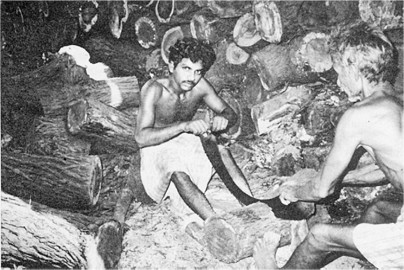
The kathi warehouse of H. H. Sidhwa and Son
"We had informed our Parsi trusts and the trustees in the past regarding this and it seems that our community members have not taken this matter seriously,” added Govadia. In 1988 too Govadia had advised that "each agiary should be self-sufficient in its kathi stock and minimize the intervention of middlemen (see "The burning need of fire-temples,” Parsiana, August 1988).” The same issue of Parsiana (see "Feeding the fires”) had also reported that babul trees had been planted at the Doongerwadis in Udvada and Baroda for the convenience of the community. Maturing after a period of 15 years, each tree yields nearly half a ton of firewood.
◆ ◆ ◆
From the archive