
Readers' Forum
Humble moorings
Recently, while indulging in my favorite pasttime of browsing through ancient chronicles pertaining to Zoroastrian religion, literature and culture I came across a Memorial Volume (long out of fashion in today’s pragmatic world) published in revered memory of Pestonji Dossabhai Marker in September 1966.
This Memorial Volume published by the Iranian Zoroastrian Anjuman and the Iran League of Bombay carries an account of the audience given by His Majesty Reza Shah Pahelvi (R.S.P.) to Pestonji Marker (P.M.) on May 19, 1949 at the Royal Palace. Marker was a stalwart who dedicated his life and fortune in aiding and assisting the Zoroastrians of Iran during the first half of the 20th century.
Given here is an extract from the conversation that took place with His Majesty when Arbab Rustam Guiv was also present:
R.S.P. What is the main purpose of your visit to Iran?
P.M. To kiss the soil of mother Iran, to have the honor of waiting upon your Majesty and to visit my institutions.
R.S.P. What was your object in making charities in Iran?
P.M. Sire, Iran is my mother and I her son. If I do not love my mother I would be ungrateful.
R.S.P. I hear that in India also you have made charities?
P.M. Your Majesty, by the grace of God I have done something.
R.S.P. When you visit Iran next time do make it a point to see me. (Marker did not visit Iran again as he passed away on roz Mohor, mah Khordad, Kadmi 1335 Yazdegardi, October 10, 1965.)
Finally when His Majesty extended his hand for a handshake, Marker took it and pressed it to his eyes, warmly shook it and departed in the company of Arbab Guiv.
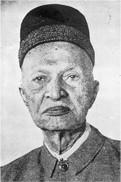
Marker: ster-ling stalwart
Incidentally, the surname Marker has an interesting origin. Pestonji Marker’s grandfather owned a shop at Ahmednagar in Maharashtra (former Bombay Presidency). Being a skillful billiard player, British officers used to know him as Marker. Hence, the name ‘Marker’ came to be adopted.
Success should teach us to always look back with an abiding sense of humility as displayed by our worthy ancestors and thereby recall our humble moorings from whence we once began: with our profound gratitude to our parents, our teachers, our well-wishers, to the numerous charitable institutions that may have aided and assisted us in attaining our goals. Most of all to the noble Zoroastrian religion whose profound philosophy and teachings have made us all what we are today.
I also recall in this context an incident in the life of another noble Zoroastrian to which I was a humble witness along with a host of others — the farewell function arranged by the staff and the members of the board of management of the Tata group of Companies on the retirement of that illustrious personage Sir Homi Mody, a scholar extraordinary, a witty and eloquent speaker, a benevolent politician of the old genre (a contradiction in modern context), a prominent figure in the commercial life of Bombay, the urbs prima of India. What appealed to us all was his innate sense of humility and candor in openly and unreservedly crediting all his success and achievements to the element of good fortune, God’s grace and to Lady Mody’s unstinted support and confidence in whatever he did and undertook in life.
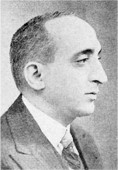
Mody: benevolent politician
Who do we have today? Only publicity seekers who are eager to grab every opportunity to see their name and (yester-year) photographs displayed by the tabloid to the glee of their sycophants. Besides, we have also amongst us a growing tribe of the scions (the bold and the beautiful) the heirs of the rich and mighty who basking in the reflected glory of their noteworthy ancestors have indeed done little for the community that has nurtured them. Perhaps, it is our own fault that we fail to inculcate in them, in their formative years the knowledge and learning of belonging to one of the most ancient and glorious civilizations of the world. We seem to be a race that has lost its moorings, in the shallow and murky waters of ceremonial rituals performed perforce and recitation of prayers in a language that we neither have the time nor the inclination to study or understand.
We have had a glorious past indeed but a dim and dismal future as a community riddled with genetic degeneration.
Dr DINSHAW D. KELAWALA
Panchgani
◆ ◆ ◆
From the archive