
In Memoriam
With respect to Rabadi
Died: Adi Bapuji Rabadi, 70, vice chairman of the West Bengal Minorities Commission, erstwhile trustee of the Calcutta Zoroastrian Community’s Religious and Charity Fund (CZCRCF) and former vice chairman and joint managing director of M. N. Dastur and Company Limited, on July 24, 2002 following a combination of ailments like cancer, cirrhosis of the liver, renal failure at the Woodland Nursing Home in Calcutta.
A member of the West Bengal Minorities’ Commission since its inception in 1996, Rabadi "served the Commission to his utmost ability till his last breath. He was a source of strength to the Commission and was readily available to give his advice and help whenever a need was felt,” noted a condolence resolution passed by the Commission. Barely four months prior to his demise he had been appointed the first marriage registrar for the Parsis of West Bengal. It was thanks to his persistence that this facility had been introduced in the state.
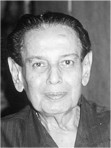
Rabadi: a source of strength
"The Commission has lost a very sincere well-wisher of the minority communities in West Bengal. I know how deeply he was involved in the welfare of the minorities though he represented the Parsis,” remarked the chairman of the Minorities Commission Justice K. M. Yusuf at a condolence meeting convened at Calcutta’s Olpadwalla Memorial Hall on August 2, 2002 when representatives of different organizations with which he was closely connected shared their reminiscences of Rabadi.
A special edition of Calcutta Gavashni, the newsletter of the CZCRCF, was dedicated to the "memory of a man who in his own soft and unassuming way contributed so much — not only to the Parsi community but to so many people and institutions in Calcutta.” The newsletter, carrying the speeches made at the condolence meeting, commended him for his "extraordinary determination...an incredible capacity for work, the will to finish whatever he (under)took and the courage and conviction to stand up for the truth.”
"Through him I could (build) a bridge with the community,” remarked Mohammed Salim, West Bengal minister for minorities affairs, recalling the meetings which they both attended when Rabadi, "true to his profession (would be) very particular about the details...Sometimes even without going through the papers (he)...could help us with details...” His presence on the grievances cell helped assuage many who had faced persecution. He was an advisory board member of the University Grants Commission’s coaching center for educationally backward minorities. Despite his failing health he involved himself with the Commission’s multifarious activities not for the returns it brought him but out of a sense of responsibility to society. As he had jokingly conveyed (see "Minorities men,” Events and Personalities, Parsiana, May 2000), "Regarding the additional privileges or perks entailed to my assignment, all I have at present is a flashing red light on the top of my car which enables me to disregard certain traffic rules...! Other than this I only get a fee of Rs 150 for attending the Commission’s meetings once a month and this helps me to cover the cost of my homemade tea which I carry daily in a flask!”
To Hashim Abdul Halim, the speaker of the West Bengal Legislative Assembly, Rabadi was "a man of the old school — soft-spoken, kind-hearted, a very good host.” "His smiling face and friendly nature” had left a lasting imprint on the governor of West Bengal Viren J. Shah, as stated his condolence letter.
"In Calcutta he was always an extraordinarily busy person. He never failed to give of himself or his time to any institution, to any society, to any charity, any club that went to him for guidance or for leadership,” observed senior trustee of the CZCRCF Numazar Mehta who viewed Rabadi as his elder brother. During the 14 years he spent as trustee of the CZCRCF "he became the ‘man of commerce’ or the ‘man of business,’ bringing to the trust the benefit of his vast array of contacts and his resources. He planned the income streams and he looked after the tax matters, laying the foundation for the trust which is today the cornerstone of our little community in Calcutta,” noted Mehta.
At the time of his death he was president of the Parsee Zoroastrian Association (PZA) in Calcutta of which he had been an active member for 30 years, variously serving as its president or vice president as he was not in favor of office bearers holding on to their post ad infinitum. "His qualities of mind and heart steered the PZA in calm waters with each and every member working in harmony and always looking up to him with respect. In spite of his busy business schedule and frequent overseas visits, he made time to squeeze in a meeting and give his support,” acknowledged PZA vice president Homi Gotla. "The Calcutta Parsi community is very compact. The relations between different Parsi organizations in Calcutta are harmonious — no infighting or politics,” Rabadi had conveyed 10 years ago in an interview with Parsiana (see "We have to review our systems,” March 1992) when he was trustee of the CZCRCF, and vice-chairman and managing director of M. N. Dastur and Company. "It is preferable to bring about a unanimous decision than have dissension and dispute,” believed the congenial Rabadi.
There were other community institutions in Calcutta too which benefitted from Rabadi’s presence. "Adi’s generosity is legend and we could always rely on him to take care of shortfalls in our finances year after year after year,” related Calcutta Parsee Club president Russi Jeejeebhoy referring to their former president’s largesse. The annual fund raising programs of the Calcutta Zoroastrian Stree Mandal where his wife Bapsy is a committee member were invariably held on the lawns of their residence, mentioned president Pervin Nusserwanji. "He has molded our community with his visionary zeal and served us till his last. As youth today, we have much to learn from his deeds and his accomplishments,” summed up Firoza Mogrelia of the Calcutta Parsee Youth League. "His whole life was based on three principles — love, honor and rectitude,” conveyed Dr Russi Anklesaria, trustee of the D. B. Mehta’s Atash Adaran Trust.
Rabadi was the youngest of five children born in an athornan family in Navsari. At the age of six he lost his father Bapuji, and his mother Piroja raised the children with the help of community charities. Following his schooling at Bombay’s Don Bosco and graduation studies at Poddar College, he qualified as a chartered accountant and joined the accounts department of Associated Cement Companies. In 1962 he had the distinction of being one of the first two members of the Institute of Chartered Accountants of India to successfully complete the management accountancy examination conducted by the Institute. For 15 years he served as paper setter, examiner/moderator for this examination, was thesis guide, and was at different times visiting lecturer at the Indian Institute of Management, Calcutta, and the Calcutta Productivity Council. His expertise on financial planning, management and control as also allied subjects was valued by different bodies like the Commission of International Investments and Economic Development, appraisal committee of the Industrial Reconstruction Corporation of India, the advisory board of the Indian Institute of Science and Information Technology, Bhubaneshwar, mentions his life profile. He had prepared studies for evaluation of iron and steel and industrial projects in India and over 20 other countries, and has pioneered research studies on social cost benefit analysis in India for the Institute of Chartered Accountants.
Having joined M. N. Dastur and Company in Calcutta as company secretary in 1964, within five years he was made director. After 31 years of service he retired as vice chairman and joint managing director in 1995 following "differences of management,” as reported Mehta. Thereafter he served as financial and management consultant to various reputed groups of industries. Believing that "Parsis should aspire towards business,” Rabadi had averred, "India could be among the five most industrialized countries in the world if the Indian entrepreneurial spirit is allowed to flourish” uncramped by clauses which restrict economic activity and motivate tax evasion.
Although the navar-martab was "an extremely religious person” in later years Rabadi realized that the dakhmenashini system was not serving its purpose (see "Review the system,” Parsiana, August 2000) and chose to be cremated. "I am also a traditionalist but I feel we have to review our systems and change according to the times,” Rabadi had conveyed when predicting his vision for the Parsi community: "I only see numbers dwindling. We have to be optimistic but with dwindling numbers and mixed marriages I don’t think there will be a Parsi identity left after 35 years.”
An inter-faith memorial service was held at his residence when 20 people from nine different religions paid tributes. His ashes were buried in a beautiful lawn of his residence next to the Bokul tree planted last year as a symbol of unity and peace among all religions, notes a write-up by Fr Michael Bhaju. There were readings from various scriptures, singing of hymns and sharing of reminiscences.
Working "effortlessly and tirelessly till his last day (he) found strength in doing so,” remarked Rabadi’s daughter Sharmeen when acknowledging the tributes paid at the CZCRCF convened condolence meeting. She further added, "My father always taught us to lead a humble existence, to be simple, kind and generous. To show compassion and never speak ill of anyone...I only hope that we as his family can carry on his legacy.”
"He was loved and respected by a cross-section of people for his amiable nature and philanthropic attitude. He will be remembered for his contribution in the field of social service as well as for the promotion of better understanding between peoples belonging to different communities,” stated Prabodh Chandra Sinha, minister in charge of parliamentary affairs and excise in the government of West Bengal.
A keen sports buff having played cricket with the likes of Polly Umrigar and Farokh Engineer since his childhood at the Dadar Parsi Colony, Rabadi retained his interest in this and other games. In the mid 1980s he was vice president of the Cricket Association of Bengal, from 1992 he was vice president of the Bengal Hockey Association and president of the West Bengal Rifle Association. A condolence resolution from the Office Sports Federation of West Bengal gave him credit for being "the builder of the resurgent Federation” and noted that "he would be gratefully remembered as a pioneer who worked hard with dedication and love for the welfare of the Federation and for the promotion of mercantile sports and games.”
In his capacity as vice president of the West Bengal Federation of United Nations Associations he was "a benefactor...who always worked for the promotion of principles and purpose of United Nations,” stated their condolence resolution. Equally committed was he to the cause of promoting the Persian language through the Iran Society of which he had demitted office as president just two days prior to his demise. As noted his successor R. M. Chopra, "He had a feeling that the younger generation today, particularly in the Parsi community is not paying (sufficient) attention to the pristine glory of Iran and the rich heritage which they have inherited.” He felt that some literature in a condensed form should be made available to each and everyone.
A string of awards like the Vijay Ratna Award, the Glory of India International Award and Gold Medal, the Shiromani Award, the Rajiv Gandhi Excellence Award, the Indira Gandhi Priyadarshini Award had been conferred on Rabadi. But as summed up Chopra, Rabadi "believed more in action rather than vain glory.”
The pragmatic benefactor is survived by his wife Bapsy, daughter Sharmeen, son Kaizad, brother Pallonji and sister Freny Russi Shroff.
◆ ◆ ◆
From the archive