
Books
“India has to learn”
"Once you young people are provided with discipline and encouragement, the sky is the limit. Do not wait for your parents or teachers to take the lead. The poor dears are too old and set in their ways and may find it difficult to change,” was the late freedom fighter Minoo Masani’s message to the youth in the chapter "The Future Is Yours” in his book We Indians. Since the Indian Liberal Group is keen that this book be read by as many young Indians as possible, an effort was made to reprint this volume first published in 1989, mentions S. V. Raju in his preface to the second edition. Barring certain statistical data which has been updated in the footnotes, the text remains the same in the two editions. "We commend this book to today’s youth, the citizens of tomorrow,” states Raju, a long-time colleague of Masani and editor of Freedom First.
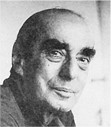
Masani: "we have to be trained”
Masani, according to the book, "was happiest when surrounded by young people.” He joined the freedom struggle shortly after completing his education in England and was deeply influenced by Mahatma Gandhi. Referring to their mutual respect for punctuality, Masani relates how once when he was having a discussion with Gandhi at his ashram at Wardha, the Mahatma interrupted him mid-sentence to remind him that his time was over. Unhappy that he had to join the bottom of the queue once again to complete the point he was making, Masani noted that when his turn came several hours later, Gandhi reminded him where he had trailed off and asked him to continue. "That was wonderful consolation for the interruption,” acknowledged Ma-sani. At another place in the book he recalled Gandhiji’s advice, "India has to learn to say ‘no.’”
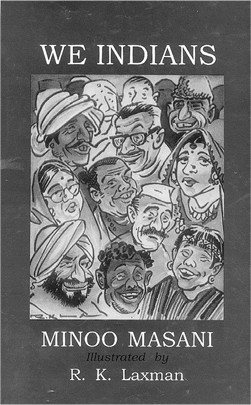
A member of the Lok Sabha and India’s Ambassador to Brazil, Masani viewed India as "our own melting pot.” Among the questions which the book addresses are: "What is the balance sheet of our post-Independence achievements and failures, and what does being a good Indian mean?” The book is replete with anecdotes from his own life as also those of his peers. With appropriate illustrations by R. K. Laxman, this 106-page book which is a sequel to his Our India (a book about the dreams and aspirations of a nation in bondage) makes enjoyable reading, reminding the reader of both his cultural and spiritual heritage. For Masani who died in 1998 at the age of 92, the golden rule in life was: "Do unto others as you would that they should do unto you.”
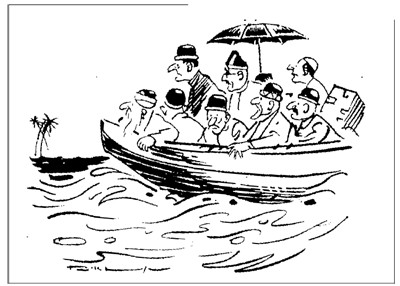
After retiring from politics Masani edited the journal Freedom First. He also founded the Leslie Sawhny Programme For Training in Democracy and the Society for the Right to Die with Dignity. Stressing on honesty, discipline, commitment, hard work, cleanliness, etc Masani points out that "an average Indian government employee works only 186 days out of 365 days in a year...Work does not come naturally to most people. We have to be trained and motivated to work.”
Published by Raju for the Indian Liberal Group, Sassoon Building, 143, M. G. Road, Bombay 400001, Tel: 2674453, We Indians is priced at Rs 50. Raju is appreciative of the financial support of the Sir Dorabji Tata Trust and the Oxford University Press for permitting them to reprint the book.
Simin J. Patel
◆ ◆ ◆
From the archive