
In Memoriam
A Punchayet pillar
Died: Cawas Sorabji Panthaki, 71, chief executive officer (CEO) of the Bombay Parsi Punchayet (BPP) and executive secretary of The Federation of the Parsi Zoroastrian Anjumans of India (FPZAI); on August 14, 2020 at the Reliance Foundation Hospital following complications arising from intestinal gangrene with perforation.
"He was sincere, dedicated and upright. He was loved by the BPP staff because he led by example and the trustees respected him because he was so trustworthy,” noted a social media post by BPP trustee Noshir Dadrawala who considered Panthaki as "God’s good man... If any task was assigned to him he would never say no but he would never hesitate to say no if he was asked to do something which he felt was not right. He was a gentleman to the core and always helpful to one and all.”
 The incessant fighting and factiona- lism on the previous board had compelled Panthaki who was then acting CEO to submit his resignation in November 2014. As he had then expressed, "How can anyone work like this? It is sheer mental torture… My nature has changed because of all the stress. I was never an angry man, but now I am angry all the time. I am sure this is spoiling my health… My heart is broken and cannot be mended (see "BPP’s management lacuna,” Events and Personalities, Parsiana, December 7, 2014).”
In the private employment of erstwhile BPP trustee Muncherji Cama for a few months thereafter, Panthaki was specially requested to return to the BPP following the election of four new trustees in 2015. For the greater good of the community, Cama relieved him from his job so that he could handle Punchayet affairs as the new CEO.
"He was as strict as he was compassionate. He was as kind as he was firm... even with the trustees, and (would) not back off from a position he believed to be the correct one,” noted a tribute by BPP trustee Kersi Randeria in the August 22 issue of Parsi Times.
With his sharp memory and systematic filing of documents, Panthaki was the go-to person for innumerable details and facts concerning the BPP or the FPZAI, attested Randeria who was instrumental in convincing Panthaki to rejoin the Punchayet.
"A good man to have come into our lives. We will surely miss him for a time to come,” remarked trustee Armaity Tirandaz who had worked with Panthaki on the erstwhile and current board.
Committed to his manifold responsibilities as CEO, the obliging workaholic who slogged incessantly would return to his home in Jogeshwari post 1 a.m. twice a week and around 10 p.m. on an average. Even weekends were devoted to Punchayet work when he would be required to inspect a BPP property or handle some other field job. Never one to avail of leave, even if he was ill, he would take some medication and report to work, recalls his wife Katie. Besides coordinating the BPP trusteeship elections, he also lent his expertise as presiding officer for the Iranian Zoroastrian Anjuman elections.
For our Milestones column, Parsiana appreciated the regularity with which he sent us the list of those consigned to the Towers of Silence each month that helped us analyze the cause and average age at death for the Parsi community in Bombay.
Cawas was a greenhorn when he started his first job at the Central Bank of India. An alumnus of Sir J. J. School, as soon as he had passed his school leaving examination, his elder brother helped him secure the Bank job. Until his graduation, he would attend classes at Sydenham College in the morning after which he would attend to his Bank duties. Having earned his CAIIB (Certified Associate of Indian Institute of Bankers) qualification, he officiated at bank examinations for many years. During his nearly 20 years with the Central Bank he was posted in cities like Ahmedabad, Bombay, London, Bangalore, Madras and a nondescript town like Idar in Gujarat where Cawas and Katie were ofttimes required to use a hand pump in the field to draw water for domestic use. Tired of frequent transfers, he resigned from Central Bank, worked for a couple of private companies, later The Zoroastrian Co-operative Bank and New India Co-operative Bank before he joined the Punchayet where he was entrusted different portfolios.
"He was sincere, dedicated and upright. He was loved by the BPP staff because he led by example and the trustees respected him because he was so trustworthy,” noted a social media post by BPP trustee Noshir Dadrawala who considered Panthaki as "God’s good man... If any task was assigned to him he would never say no but he would never hesitate to say no if he was asked to do something which he felt was not right. He was a gentleman to the core and always helpful to one and all.”
The incessant fighting and factiona- lism on the previous board had compelled Panthaki who was then acting CEO to submit his resignation in November 2014. As he had then expressed, "How can anyone work like this? It is sheer mental torture… My nature has changed because of all the stress. I was never an angry man, but now I am angry all the time. I am sure this is spoiling my health… My heart is broken and cannot be mended (see "BPP’s management lacuna,” Events and Personalities, Parsiana, December 7, 2014).” In the private employment of erstwhile BPP trustee Muncherji Cama for a few months thereafter, Panthaki was specially requested to return to the BPP following the election of four new trustees in 2015. For the greater good of the community, Cama relieved him from his job so that he could handle Punchayet affairs as the new CEO.
"He was as strict as he was compassionate. He was as kind as he was firm... even with the trustees, and (would) not back off from a position he believed to be the correct one,” noted a tribute by BPP trustee Kersi Randeria in the August 22 issue of Parsi Times.
With his sharp memory and systematic filing of documents, Panthaki was the go-to person for innumerable details and facts concerning the BPP or the FPZAI, attested Randeria who was instrumental in convincing Panthaki to rejoin the Punchayet.
"A good man to have come into our lives. We will surely miss him for a time to come,” remarked trustee Armaity Tirandaz who had worked with Panthaki on the erstwhile and current board.
Committed to his manifold responsibilities as CEO, the obliging workaholic who slogged incessantly would return to his home in Jogeshwari post 1 a.m. twice a week and around 10 p.m. on an average. Even weekends were devoted to Punchayet work when he would be required to inspect a BPP property or handle some other field job. Never one to avail of leave, even if he was ill, he would take some medication and report to work, recalls his wife Katie. Besides coordinating the BPP trusteeship elections, he also lent his expertise as presiding officer for the Iranian Zoroastrian Anjuman elections.
For our Milestones column, Parsiana appreciated the regularity with which he sent us the list of those consigned to the Towers of Silence each month that helped us analyze the cause and average age at death for the Parsi community in Bombay.
Cawas was a greenhorn when he started his first job at the Central Bank of India. An alumnus of Sir J. J. School, as soon as he had passed his school leaving examination, his elder brother helped him secure the Bank job. Until his graduation, he would attend classes at Sydenham College in the morning after which he would attend to his Bank duties. Having earned his CAIIB (Certified Associate of Indian Institute of Bankers) qualification, he officiated at bank examinations for many years. During his nearly 20 years with the Central Bank he was posted in cities like Ahmedabad, Bombay, London, Bangalore, Madras and a nondescript town like Idar in Gujarat where Cawas and Katie were ofttimes required to use a hand pump in the field to draw water for domestic use. Tired of frequent transfers, he resigned from Central Bank, worked for a couple of private companies, later The Zoroastrian Co-operative Bank and New India Co-operative Bank before he joined the Punchayet where he was entrusted different portfolios.
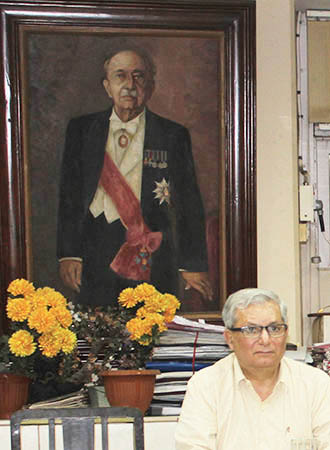
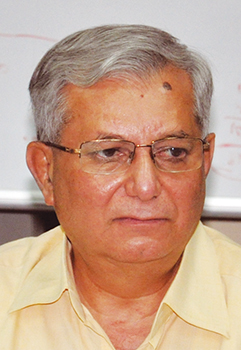
Cawas Panthaki (above) and in the BPP boardroom (alongside)
Despite being diagnosed with myasthenia gravis, an auto immune disease, almost five years earlier, he continued to work ceaselessly until January this year when his health deteriorated requiring surgery for diverticulitis, intestinal gangrene and other complications. While the Rs 25 lakh bill at the Breach Candy Hospital was paid by the BPP, for the subsequent hospitalization at the Reliance Foundation Hospital, Dinshaw Tamboly of The WZO (World Zoroastrian Organisation) Trust Funds helped with two cheques and appeals were also made to other medical trusts. Katie is beholden to the "trustees and staff who helped with everything.” Even when Cawas urgently needed blood, members of the community, including some pallbearers from the Doongerwadi rushed to his aid.
Bombay born Cawas had completed his navar-maratab training from the Banaji Limji Agiary although he did not practice as a priest. He firmly believed in prayers though and would visit a fire temple daily and the Bhikha Behram Well every Friday.
The straightforward Punchayet officer is survived by his wife Katie.
◆ ◆ ◆
From the archive