
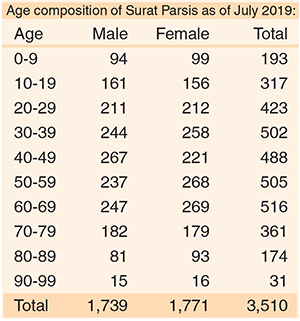
Surat population down five percent
The 2019 Surat directory shows an aging, declining yet vibrant community
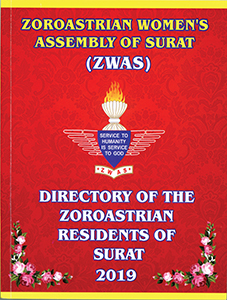 The directory includes the names of family members, addresses and phone numbers of all Zoroastrians in Surat. A separate page lists the names and phone numbers of the eight trustees of the Surat Parsi Panchayat (SPP). A page has been reserved for those who are engaged in home industry. Also included are articles on religion by Rohin Karanjia and Rusi Besania, and a humorous piece by dramatist Yazdi Karanjia on the relevance of humor in day-to-day life. ZWAS trustee Maharukh Chichgar sent a copy of the Directory and a write-up on its launch to Parsiana. "Few color pages include photographs and reports of activities of ZWAS,” she wrote.
 Age profiles of the 30 inmates (both male and female) of the Nariman Home (infirmary) indicate that the residents range in age from 52 to 87. Twenty-two residents ranging in age from nine to 26 years live at the Surat Parsi Orphanage for boys, while the 39 girls in the Nariman Parsi Girls’ Orphanage range in age from four to 20. Twelve institutions are run by the SPP.
Thirteen pages are devoted to volunteer blood donors in various groups: O +ve (355); O -ve (36); A +ve (208); A -ve (10); B +ve (286); B –ve (27); AB +ve (89); AB -ve (six). The total number of blood donors is 1,017.
Fifty-four dharamshalas all over India are listed with addresses and phone numbers. Around 17 are in Gujarat. For Bombay, four are listed, of which only one (Meherwanji Framjee Pandey Sanatorium in Thakurdwar) is in operation. Others are closed and one is an office address.
Crediting the teamwork exhibited by their members, outgoing president Mahtab Variava wrote in a message that the Directory was a "prestigious and herculean task,” while incoming president Delnaz Katpitia noted that "every house in Surat very proudly displays this Directory as it is a publication which brings the community together.”
Advisory panel member Vira Karanjia listed the multifarious activities of the Assembly undertaken over the years: mammography, pap smear tests and sonography for women; installation of sanitary napkin vending machines at P. M. Patel Girls’ School, orphanage and Udhna Citizen College; youth meets; Gatha celebrations with prayer competitions for children under 15 and competitions in card making, monajat singing and fancy dress; summer camps; financial assistance for the deserving.
"I am impressed with the number of social activities that you are engaged with,” noted Udvada High Priest and member of the National Commission for Minorities Dastur Khurshed Dastoor in a message printed in the Directory. Parzor director, Dr Shernaz Cama wrote that the residents of Surat have "managed to combine the best traditions of the past while moving confidently into the future.”
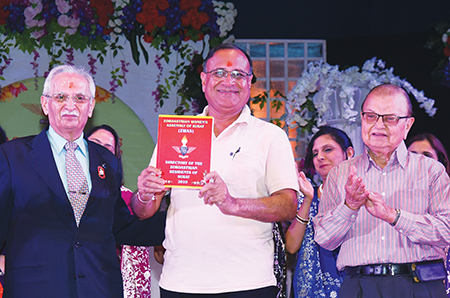
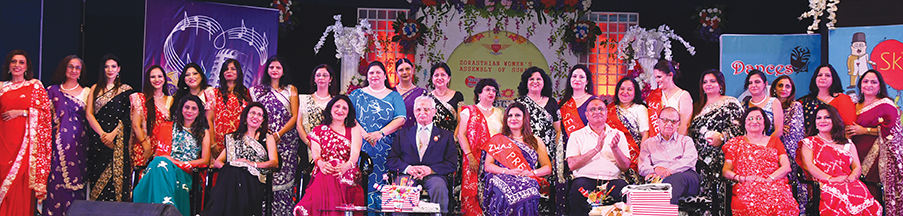
Released on the cloudy, windy evening of August 16, 2019, the event at the Sanjeev Kumar Auditorium was livened up by "the women of ZWAS dressed in their colorful garas,” wrote Chichgar. An entertainment program and an installation of a new committee for the years 2019-2022 were other highlights of the evening. Chief guest and mayor of Surat Dr Jagdish Patel appreciated the traditional welcome of kanku-chokha (vermillion and rice) and achhu-michhu, while lauding the contribution of the Parsis to Surat and India, Chichgar noted.
 The highlight of the entertainment program titled "Mega Masti” included "melodious songs sung by Shehzad Karanjia in his velvety voice supported by the nightingale of ZWAS Dilnaz Besania,” A traditional Parsi garbo, skits by Yazdi Karanjia and his troupe and dances provided a "mixed bag of entertainment,” wrote Chichgar. Benaifer Engineer, Firozi Karanjia and Chichgar compered the function while Perin Karanjia proposed a vote of thanks. Chichgar appreciated the team’s effort under Engineer’s supervision for the success of the event.
SPP president Jamshed Dotivala welcomed the new ZWAS committee, mentioned Chichgar. For the next three years, ZWAS will be led by president Katpitia, vice president Aafrin Patrawala, secretary Firozi Karanjia, joint secretary Nilufer Bavaadam and treasurer Dilnaz Besania. The program and social work committees will be led by Zinobia Dotivala and Gulshan Master respectively with their teams, while Vira Karanjia, Perin Karanjia, Gulshan Chiniwala, Keshmira Palia and Pearl Wadia will be on an advisory panel.
Surat is among the few to regularly publish a directory of its residents.
Publishing a directory with such a broad range of information is a tedious task and any community that can accomplish it deserves congratulations! The headline grabbed my attention... "Surat population down five percent - The 2019 Surat directory shows an aging, declining yet vibrant community." This begs further analysis of the figures. Is it the usual simple arithmetic of numbers deceased being greater than numbers born? Or is there a more complex algebraic equation behind the decline? Did some young persons migrate to pursue education or employment? Did some women marry grooms in other cities and migrate? Did some women marry non-Parsis and were dropped from the count even if they continued to live in Surat? Such vital community issues need attention to help grasp underlying issues. Recording the facts and celebrating accomplishments as a significant part of the Surat metropolis in which they reside is indeed a commendable "prestigious and herculean task." Congratulations!
Great effort has gone in making information available in all details and publishing the directory which is very commendable. The information when generalized reflects the trend which is common for the Parsis and the Zoroastrian population in India and abroad. The median age of the community is going up as the number of those above the age of 40 years keep on going up and the under 40 keeps going down. Once one is above 40 years it is difficult to have children. Unless there is a drastic increase in the number of children resulting in more marriages the community numbers will go on decreasing until such time when in a decade or two those alive will be old men and women.