
Events & Personalities
A “token of gentility”
When N. S. Ginwalla of Bharuch wrote a letter to The Times of India in September 1888, the newspaper gave it the heading "‘Mr’ or ‘Esquire?’ Which title was to be used and on whose authority?” The letter sparked off "weeks of debate in the letters and editorial columns of local newspapers,” wrote journalist and special features editor of The Economic Times, Vikram Doctor, in the paper’s August 13, 2019 edition. Ginwalla pointed out that "a keen contest is going on between the two titles (Mister and Esquire).” He bemoaned that while Esquire may have signified once a "token of gentility,” but was now used so indiscriminately that "a very large number of people address their friends as ‘Mr’ on the ground that the alternative title has become too common for usage as a mark of distinction. Ginwalla was upset at the use of Esq "after the name of a second or third-class European or Eurasian…and the withholding of it from a respectable native gentleman.” Doctor noted that "it was the implicit racism that really hurt and which made Ginwalla propose that the government set rules for how people were to be addressed.”
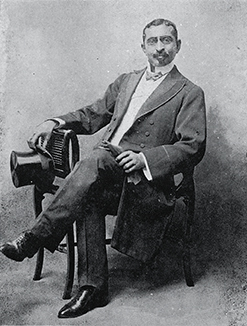
Sorab Palamkote (1865-1909) founder and secretary of the
Parsi Writers’ Association
Photo for representational purpose of gentility from Parsi Lustre on Indian Soil
In a further letter in November 1888, Ginwalla despaired that "this country (India) is being absolutely flooded with titles,” noting that "the people of this country seem to have a weakness for being better pleased with titles than anything else.” He was ostensibly referring to the "confusing array of Rae and Khan Bahadurs…, Dewans and Divans, Raj Ratnas, Jam Sahibs, Jamadars, Sardars and so much more,” wrote Doctor.
Doctor commented that pro-Brexit British politician and member of the Cabinet Jacob Rees-Mogg has recently "instructed bureaucrats to…use old Imperial measures as pounds and miles and to address all non-titled mails as ‘Esquire’ or ‘Esq.’” "The politician’s devotion to Brexit derives, according to him, from a devotion to the older British way of doing things,” wrote Doctor.
◆ ◆ ◆
From the archive