
Events & Personalities
Glimpses of history
What truly earned for the kings of ancient Persia like Cyrus, Darius and Xerxes the title of "Great” was not the size of their vast armies, or the fact that they were the first to build a world empire. Their greatness lay in the laws that they established, the enormous developmental works that were carried out and their high sense of truth, justice and tolerance, said Noshir Dadrawala, chief executive officer of the Centre for Advancement of Philanthropy and former Bombay Parsi Punchayet trustee. He was delivering a lecture along with a Power Point presentation on "Glimpses of Ancient Zoroastrian History” at the Seth N. Karani Agiary Hall in Cusrow Baug on August 2, 2015.
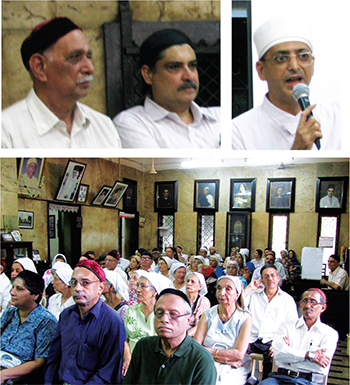
(Clockwise, from top l): Bomi Hansotia, Noshir Dadrawala,
Ervad Yezdi Aibara; audience
Within the span of about an hour, Dadrawala covered the history of ancient Zoroastrian Iran from the two prehistoric dynasties, Peshdadian and Kayanian, to the splendor of the Achemenian, Parthian and Sasanian empires, mentions an email received by Parsiana from Bomi Hansotia, managing trustee of the Seth N. K. Agiary Trust. There were several "firsts” in Iran, Dadrawala elaborated: declaration of human rights, freedom of worship, the postal and courier systems, redemption from slavery of the Jews in Babylon, conquest of Rome with the Roman emperor kneeling before his Iranian counterpart, the envoy from India paying tribute to the king.
The Power Point presentation included images of ancient Zoroastrian monuments and interesting archeological findings about the early monarchs. Dadrawala read out various ancient inscriptions which are not merely inspiring but also relevant to modern times. He also referred to the discovery of fire by King Hoshang and of wine by King Jamsheed, the spiritual prowess of Shah Faredoon and Shah Lohrasp. The audience, which had filled the main Karani Hall to capacity, listened with rapt attention to the speaker who dwelt on the efforts made by the Parthians to revive Zoroastrianism after 80 years of Macedonian rule and the later Sasasnian kings declaring it to be the state religion of Iran. He described Ardeshir Babakan as defender of the faith and Shahpur as one who brought mighty Rome down to its knees.
There are lessons to be learnt from history, Dadrawala concluded, the chief one being that disunity is usually the reason behind the fall of every great empire.
The meeting, organized by the Trust, began with a jashan ceremony and humbandagi led by Ervad Yezdi Aibara, panthaky of the Agiary. Hansotia asked the gathering to observe two minutes’ silence in memory of the late former President of India, Dr A. P. J. Abdul Kalam, members of the Karani and Wadia families.
◆ ◆ ◆
From the archive