
Observation
Ardhi bawi
A close connect with the Parsi community has a lasting impact on a Tamilian Brahmin
My grandmother used to say, "Appapah...Sahavaasa Dosham!” which means "Oh gosh...imbibing the faults of those you keep company with.”
This was not meant literally. It was said in jest implying that very often we begin reflecting the traits of those with whom we associate.
My "Sahavaasa” of a lifetime has been with the glorious community of Parsis.
It has had a remarkable outcome on the surface: speaking Gujarati with a Parsi accent (kharré khar!), an insight into Parsi gaalis (swear words), not to mention certain characteristics and flashes of quirkiness. And, at a deeper level, an understanding of the real meaning of generosity.
Sahibji…
This was not meant literally. It was said in jest implying that very often we begin reflecting the traits of those with whom we associate.
My "Sahavaasa” of a lifetime has been with the glorious community of Parsis.
It has had a remarkable outcome on the surface: speaking Gujarati with a Parsi accent (kharré khar!), an insight into Parsi gaalis (swear words), not to mention certain characteristics and flashes of quirkiness. And, at a deeper level, an understanding of the real meaning of generosity.
Sahibji…
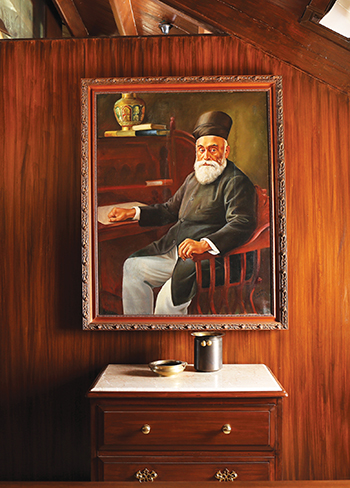
Portrait of Jamsetji Tata
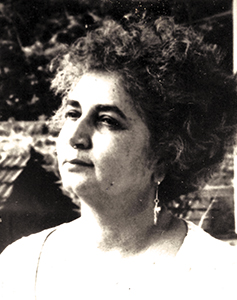
Avie Writer
Bawas and bawis have dominated my life since I was a child.
This goes back to my grandfather who debated politics, economics and the nuances of language and literature with his friend Faredoon Chinoy at the Secunderabad Club in the twin city of Hyderabad, where my family has lived for generations.
My father’s friends in Hyderabad were largely Parsis and so were the people he trusted most. For instance, the family of Gardas, the erstwhile dry cleaners of Hyderabad were patronized by my entire family even after they had gone into near extinction. The reason? My father implicitly believed, like his father and grandfather before him, that Parsis were the most sincere people on the face of the earth and had confidence that even the most stubborn stain would be removed by them diligently.
No wonder then that my father, the only non-lawyer in his family, when he moved to Bombay, admitted me in the Alexandra Girls’ English Institution. While Nawaz and Benafsha tucked into their sali boti at lunch break, I would dig into my rice and curd. That is when I discovered the Parsis’ love for rasam (pepper laced soup). Dolly Dodhi would abandon her kolmi no patio to slurp the tomato rasam in my Tambrahm dabba. She lived in Green Fields near the Oval, round the corner from us and impressed my mother saying that she could live on rasam alone! My mother still remembers how Dolly drank up all the rasam that had been made for lunch and asked if she could return for more at dinner. Decades later, it was déjà vu for my mother, when she made rasam for Aseena Viccajee who asked whether she could have an extra helping!
In my first year of school, when I flunked in maths, an agitated father who dreamt of my being a gold medalist sent me packing to Meheroo Mahaluxmivala in Firuz Ara near the Cooperage for some rigorous tuition. Most of the time, Ms M was outraged at my (in)ability to count.
Very often father, who picked me up from my worst biweekly nightmare, would hear a guttural rolling of Rs…"Rrrrrrrrrrubbish” as the teacher fired me for writing that three times three was 10.
But she was as kind as she was strict and gave me my first taste of Poona biscuits.
My kindergarten teacher at Alexandra was the gentle Deena Bilimoria who charmed my rather reclusive mother into visiting her home where she stayed with her sister Avie Writer. That is where my mother met Writer, my future godmother, who was to be my friend, philosopher and guide.
Writer was every inch a Parsi from her old fashioned English dress (she called it ‘frock’) to her piano playing (she proudly said she had played for the BBC. On closer questioning, it was the Burma Broadcasting Service)…to her large flock of Parsi doctors, lawyers and auditors.
There was one deviation. She came from a family of theosophists who moved to India after fleeing Burma during the war. She was always in search of a guru and found one in the heart of Kerala. The irony was that in a house filled with charming old western artifacts, and after playing a few bars of Beethoven’s Fifth Symphony on her grand piano, she would dart away to do an aarti to her guru using Sanskrit chants that vaguely sounded like those emerging from the Sistine Chapel.
I will never forget how Writer made me teach her a Kerala bhajan (devotional song), "Ore kumbol tava pooval meni” by rendering the Carnatic music content in western music notation. At the end of this tutoring, to any passerby we would have sounded like a pair of opera singers belting out desi lyrics. On a more emotional note, tears welled in my eyes when with her aarti in hand and eyes closed with devotion, she sang this time and time again and said that she had reached the feet of her guru.
I imbibed some very important lessons at Writer’s feet. When I was 19 and newly married, I often took a taxi to her house to vent some of my anxieties and worries about living in a joint family. On one such "pour my heart out” day I was five minutes late, and she was most annoyed. She said, "If you don’t respect other people’s time, you don’t respect people and in turn you are not deserving of respect” — words that have stayed with me for a lifetime. My family and friends know how paranoid I am about keeping appointments.
Writer once asked me to lunch and told me I was the only one invited. I was amazed to see that she had taken out her finest silver and cutlery and I exclaimed, "Auntie Avie! This is not a party… it’s only me!”
"It is for those you love that you should do the most, and for me you are a queen in my house,” she said.
She took me to a corner, sat me down and taught me another lasting lesson. She said, "It’s strange how people like to put their best foot forward at a party for guests they hardly know, and take others, whom they value most, for granted.”
Avie was married to Jal Writer who was nine years younger. I was brought up in a traditional Tamil Brahmin background where girls married much older men. My father was over 10 years senior to my mother and I could not imagine how a woman could marry someone younger.
Avie scoffed and said, "Age is only a number. It has nothing to do with a relationship which comprises understanding and compassion.” To this date, when friends flounder after meeting a much older man or a much younger one… all I do is pull out her quote.
Till date, good old Keki Court on Cumballa Hill, where Avie lived with her own brand of philosophy, has a very special place in my heart — a place where I consumed kilos of dhansak, bafaat, and lagan nu bhonu — lapping up her take on every subject; a place where she introduced me to her niece who would become my life long friend, Niloufer Bilimoria; a place where Avie’s daughter, the blue eyed Khubi, now teaches dramatics to little children supervised by Tripod, a three-legged adopted stray dog.
I had always dreamt, like my mom and grandmother before me, of being a perfect housewife. I thought the purpose of life was to cook sambar and rasam, string mallipu, draw rangoli patterns outside the home, recite Vedic chants and be fresh and smiling to welcome the husband in the evening, taking away his briefcase and giving him a cup of hot filter coffee.
Avie destroyed these notions with one strong blow. She said her Parsi community believed in gender equality and ignited my first flame of ambition and parity.
I joined Everest advertising where two wonderful Parsis entered my life.
Noshir Desai was irrepressible. He was a complete bawaji in every respect, except when it came to food. One day he said, "Aré chalni chalni, let’s try Narsi Lodge.” To access this Lodge near VT station, one had to climb up two floors, where one sat on the floor and ate piping hot rotlas and shak. A motley collection of people gathered here for lunch every day. Coolies, typists, Handloom House salesmen. When he saw me grimace, an aghast Desai teased me saying I was too Hyderabadi and the Begum-type. He said he wanted to get me grounded. After this initial dressing down, we enjoyed many meals there, and graduallly, many joined this bawa Pied Piper. In due course Narsi Lodge became Noshir Lodge to us.
Enter Farhad Gimi who said I took life too seriously and brought a lot of humor into my life — the ability to laugh and be laughed at. With just a week to go before having my first child, in my full blown pregnancy state, I would collapse gratefully into my chair at work. Gimi said, "Look at you darling, collapsing like a harpooned whale.”
My close friends in advertising include Armaity Cabinetmaker who defied the men in the office to move her foot placed firmly on the floor. She handled Ambuja Cement, which boasted of giant strength, so nobody challenged her. The other was a more gentle fellow, Ronnie Wadia who asked for a starched napkin to wear as a bib. No harm in that, except when he demanded it in Udipi restaurants!
I cannot be blamed for my eccentric behavioral patterns. Blame "Sahavaasa Dosham!”
In the years of fund-raising for S. P. J. Sadhana School, at Sophia College, a wonderful institution for special children, my tryst with Parsis continued. Two unimaginably generous people came into my life. Both whipped out their cheque books and said, "Here, fill in the amount.” Jamshed Guzder and Jamshed Bhabha were both over 80, extremely emotional and vulnerable, and the last thing I wanted was to take advantage of this.
In Bombay, my gher sansaar (home environs) was thanks to Hirjee Nagarwala who ensured that my neighbors were Billimorias and Unwallas. He offered the greatest temptation for moving in by saying that the legendary Zubin Mehta had grown up in the bungalow. That sealed it. Soon after, I welcomed a Parsi sister-in-law into our home when Pheroza Godrej became my husband’s rakhi sister!
This goes back to my grandfather who debated politics, economics and the nuances of language and literature with his friend Faredoon Chinoy at the Secunderabad Club in the twin city of Hyderabad, where my family has lived for generations.
My father’s friends in Hyderabad were largely Parsis and so were the people he trusted most. For instance, the family of Gardas, the erstwhile dry cleaners of Hyderabad were patronized by my entire family even after they had gone into near extinction. The reason? My father implicitly believed, like his father and grandfather before him, that Parsis were the most sincere people on the face of the earth and had confidence that even the most stubborn stain would be removed by them diligently.
No wonder then that my father, the only non-lawyer in his family, when he moved to Bombay, admitted me in the Alexandra Girls’ English Institution. While Nawaz and Benafsha tucked into their sali boti at lunch break, I would dig into my rice and curd. That is when I discovered the Parsis’ love for rasam (pepper laced soup). Dolly Dodhi would abandon her kolmi no patio to slurp the tomato rasam in my Tambrahm dabba. She lived in Green Fields near the Oval, round the corner from us and impressed my mother saying that she could live on rasam alone! My mother still remembers how Dolly drank up all the rasam that had been made for lunch and asked if she could return for more at dinner. Decades later, it was déjà vu for my mother, when she made rasam for Aseena Viccajee who asked whether she could have an extra helping!
In my first year of school, when I flunked in maths, an agitated father who dreamt of my being a gold medalist sent me packing to Meheroo Mahaluxmivala in Firuz Ara near the Cooperage for some rigorous tuition. Most of the time, Ms M was outraged at my (in)ability to count.
Very often father, who picked me up from my worst biweekly nightmare, would hear a guttural rolling of Rs…"Rrrrrrrrrrubbish” as the teacher fired me for writing that three times three was 10.
But she was as kind as she was strict and gave me my first taste of Poona biscuits.
My kindergarten teacher at Alexandra was the gentle Deena Bilimoria who charmed my rather reclusive mother into visiting her home where she stayed with her sister Avie Writer. That is where my mother met Writer, my future godmother, who was to be my friend, philosopher and guide.
Writer was every inch a Parsi from her old fashioned English dress (she called it ‘frock’) to her piano playing (she proudly said she had played for the BBC. On closer questioning, it was the Burma Broadcasting Service)…to her large flock of Parsi doctors, lawyers and auditors.
There was one deviation. She came from a family of theosophists who moved to India after fleeing Burma during the war. She was always in search of a guru and found one in the heart of Kerala. The irony was that in a house filled with charming old western artifacts, and after playing a few bars of Beethoven’s Fifth Symphony on her grand piano, she would dart away to do an aarti to her guru using Sanskrit chants that vaguely sounded like those emerging from the Sistine Chapel.
I will never forget how Writer made me teach her a Kerala bhajan (devotional song), "Ore kumbol tava pooval meni” by rendering the Carnatic music content in western music notation. At the end of this tutoring, to any passerby we would have sounded like a pair of opera singers belting out desi lyrics. On a more emotional note, tears welled in my eyes when with her aarti in hand and eyes closed with devotion, she sang this time and time again and said that she had reached the feet of her guru.
I imbibed some very important lessons at Writer’s feet. When I was 19 and newly married, I often took a taxi to her house to vent some of my anxieties and worries about living in a joint family. On one such "pour my heart out” day I was five minutes late, and she was most annoyed. She said, "If you don’t respect other people’s time, you don’t respect people and in turn you are not deserving of respect” — words that have stayed with me for a lifetime. My family and friends know how paranoid I am about keeping appointments.
Writer once asked me to lunch and told me I was the only one invited. I was amazed to see that she had taken out her finest silver and cutlery and I exclaimed, "Auntie Avie! This is not a party… it’s only me!”
"It is for those you love that you should do the most, and for me you are a queen in my house,” she said.
She took me to a corner, sat me down and taught me another lasting lesson. She said, "It’s strange how people like to put their best foot forward at a party for guests they hardly know, and take others, whom they value most, for granted.”
Avie was married to Jal Writer who was nine years younger. I was brought up in a traditional Tamil Brahmin background where girls married much older men. My father was over 10 years senior to my mother and I could not imagine how a woman could marry someone younger.
Avie scoffed and said, "Age is only a number. It has nothing to do with a relationship which comprises understanding and compassion.” To this date, when friends flounder after meeting a much older man or a much younger one… all I do is pull out her quote.
Till date, good old Keki Court on Cumballa Hill, where Avie lived with her own brand of philosophy, has a very special place in my heart — a place where I consumed kilos of dhansak, bafaat, and lagan nu bhonu — lapping up her take on every subject; a place where she introduced me to her niece who would become my life long friend, Niloufer Bilimoria; a place where Avie’s daughter, the blue eyed Khubi, now teaches dramatics to little children supervised by Tripod, a three-legged adopted stray dog.
I had always dreamt, like my mom and grandmother before me, of being a perfect housewife. I thought the purpose of life was to cook sambar and rasam, string mallipu, draw rangoli patterns outside the home, recite Vedic chants and be fresh and smiling to welcome the husband in the evening, taking away his briefcase and giving him a cup of hot filter coffee.
Avie destroyed these notions with one strong blow. She said her Parsi community believed in gender equality and ignited my first flame of ambition and parity.
I joined Everest advertising where two wonderful Parsis entered my life.
Noshir Desai was irrepressible. He was a complete bawaji in every respect, except when it came to food. One day he said, "Aré chalni chalni, let’s try Narsi Lodge.” To access this Lodge near VT station, one had to climb up two floors, where one sat on the floor and ate piping hot rotlas and shak. A motley collection of people gathered here for lunch every day. Coolies, typists, Handloom House salesmen. When he saw me grimace, an aghast Desai teased me saying I was too Hyderabadi and the Begum-type. He said he wanted to get me grounded. After this initial dressing down, we enjoyed many meals there, and graduallly, many joined this bawa Pied Piper. In due course Narsi Lodge became Noshir Lodge to us.
Enter Farhad Gimi who said I took life too seriously and brought a lot of humor into my life — the ability to laugh and be laughed at. With just a week to go before having my first child, in my full blown pregnancy state, I would collapse gratefully into my chair at work. Gimi said, "Look at you darling, collapsing like a harpooned whale.”
My close friends in advertising include Armaity Cabinetmaker who defied the men in the office to move her foot placed firmly on the floor. She handled Ambuja Cement, which boasted of giant strength, so nobody challenged her. The other was a more gentle fellow, Ronnie Wadia who asked for a starched napkin to wear as a bib. No harm in that, except when he demanded it in Udipi restaurants!
I cannot be blamed for my eccentric behavioral patterns. Blame "Sahavaasa Dosham!”
In the years of fund-raising for S. P. J. Sadhana School, at Sophia College, a wonderful institution for special children, my tryst with Parsis continued. Two unimaginably generous people came into my life. Both whipped out their cheque books and said, "Here, fill in the amount.” Jamshed Guzder and Jamshed Bhabha were both over 80, extremely emotional and vulnerable, and the last thing I wanted was to take advantage of this.
In Bombay, my gher sansaar (home environs) was thanks to Hirjee Nagarwala who ensured that my neighbors were Billimorias and Unwallas. He offered the greatest temptation for moving in by saying that the legendary Zubin Mehta had grown up in the bungalow. That sealed it. Soon after, I welcomed a Parsi sister-in-law into our home when Pheroza Godrej became my husband’s rakhi sister!
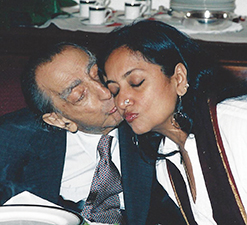
Geeta Gopalakrishnan with Dr Jamshed Bhabha on Valentine’s Day
During my years in Bangalore, where I went with my begging bowl to raise funds for underprivileged kids with cancer, I met the bright eyed Bachi Karkaria. If my grandmother had seen her effortless flow of ink to paper, she would have said, "Appapah! Saraswati Kataksham.” Indeed this lady with the blessings of the goddess of learning wrote an incredible middle on cancer, "Making the Big C smaller.”
Speaking of cancer, destiny sent me into the portals of Tata Medical Center (TMC) in the strangest manner. This time around, the most distinguished Parsi in the world entered my home in the form of a painting. My neighbor, who was clearing out his garage to create a discotheque, said there was a package which he termed, "Aap ka Tatawala photo.” He wanted me to have it. When I opened the old dusty covers, I found an incredible old painting of Jamsetji Tata which I hung at home just for a night and returned it to its rightful place, Bombay House.
Soon after, in a completely random incident, R. K. Krishna Kumar, director of Tata Sons, attended a Sadhana fund-raiser and gave the much needed donation that permitted the School to expand. Krishna Kumar asked me to come and meet him that evening about helping raise funds for underprivileged cancer patients at TMC.
And there I was. Where Jamsetji perhaps intended me to be — Bombay House! After five years there, our team is now located in the Army Navy Building trust offices. I asked for a boon that Jamsetji’s painting be brought there to inspire us. It was granted and he now smiles down benignly upon us.
In the course of fund-raising, I had the honor of being associated with the legendary Dr Ketayun Dinshaw, bright, energized and inspirational. In her years at Tata Memorial, she had witnessed the agony of so many from eastern India who came to the Hospital for treatment, but never returned. The Indian Cancer Registry revealed that the maximum numbers of specific cancers were from eastern India.
Filled with compassion, the Tatas envisaged the Tata Medical Center, a Rs 350 crore world class not-for-profit cancer hospital in Calcutta, where close to half the beds are for the most underprivileged. Dinshaw and I raised funds for a dream she had, Premashraya, a home away from home for the poorest of poor cancer patients, located within a stone’s throw of the TMC.
It is ironic that Dinshaw, who diagnosed and helped cure thousands, succumbed to cancer and did not live to see her dream take shape and witness its inauguration in July 2014.
Towards the end she kept saying that I had many miles to go to garner funds for the building of Premashraya and that her only wish for me was to never stop or tire.
In her last days, Dinshaw craved for a taste of South Indian cuisine that reminded her of her student days in Vellore, and I was back to carrying tomato rasam in a dabba. Around this time, she introduced me to Noshir Sethna and we continue to reminisce about her.
Should any of you readers wish to pay a tribute to Dinshaw and her years of selfless work, you can do something that she would perhaps appreciate most — look after a patient with cancer at Premashraya (prem.premashraya@tmckolkata.com). Pull out your cheque book and ask me for the amount. This time, there will be no hesitation. Tata Medical Centre Trust, Army and Navy Building, 3rd Floor,148, M. G. Road, Kala Ghoda, Bombay 400001
.jpg)
(Geeta Gopalakrishnan works as Honorary Director, Donor Relationships, Tata Medical Center.)
◆ ◆ ◆
From the archive