
Events & Personalities
“There is no samaaj”
The following is the text of an intervention by noted jurist and former member of the Rajya Sabha Fali Nariman at the 16th meeting of the members of the National Integration Council at Vigyan Bhavan, New Delhi on September 23, 2013, organized by the Ministry of Home Affairs, Government of India, New Delhi:
Mr Prime Minister, Mr Home Minister and fellow-members
I sit here with a heavy heart.
The topics given on today’s agenda:
measures to promote communal harmony... Promoting national integration… Tackling hate propaganda;
confidence building measures to tackling communal situations;
safety and security of women; and
removing inter-caste tension.
On these topics I ask myself whether we in this country are better off since this august gathering last met two years ago. I cannot truthfully say we are. As many other members have said, we are worse off.
Never was there greater need for a truly national integration than now — because, as I see it as a nation we do appear to be (if we are not in fact) disintegrating.
Mr Prime Minister, Mr Home Minister and fellow-members
I sit here with a heavy heart.
The topics given on today’s agenda:
measures to promote communal harmony... Promoting national integration… Tackling hate propaganda;
confidence building measures to tackling communal situations;
safety and security of women; and
removing inter-caste tension.
On these topics I ask myself whether we in this country are better off since this august gathering last met two years ago. I cannot truthfully say we are. As many other members have said, we are worse off.
Never was there greater need for a truly national integration than now — because, as I see it as a nation we do appear to be (if we are not in fact) disintegrating.
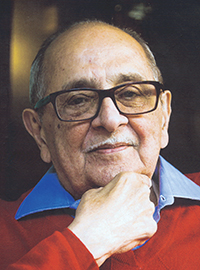
Fali Nariman: looking for answers
And the reason is not law — the reason is not because we need more laws. I agree with what the Hon’ble Mr Sharad Pawar said, Kanoon sé samaaj nahi bunta (Law does not create a society): samaaj is in the hearts of the people. And when responsible leaders of political parties utter irresponsible statements they stir the hearts of the people. And there is no samaaj — no peace: only disappointment and friction. And when responsible politicians utter such statements a free press and media naturally — since it is news — disseminate it, there is disturbance of communal harmony. Instead of merely stating platitudes it would be good if political leaders set the tone by uttering words that do not hurt or harm, but soothe. I beg of leaders — who unfortunately, are part of the cause of all communal tension — to eschew statements that propagate communalism, casteism and regionalism.
As a member of the smallest though (I like to think) enlightened community, I list my apprehensions in the form of a few queries. I have been looking for some time for adequate answers — but not found any: so there are only queries. I assure you all that I have no political agenda so please don’t look for any.
These are my queries:
After more than 65 years after independence are we shifting from a vibrant secular state into a non-secular state? I fear we are.
After more than 65 years of independence (with Khap-panchayats and the like) are we moving backwards to a male-dominated, male-oriented society which breeds a lack of respect for the dignity and safety of women? I fear we are.
After more than 65 years of independence are we lapsing — at the almost quickening pace of climate change — into a people concerned with one dominant religion, intolerant towards all other religions? Again, I fear we are.
Fourth and last: is pluralism in India on its death-bed? I hesitate to say it, but feel compelled to say it — I gravely fear it is.
I have lived happily in a secular India and I had hoped to die in a secular India. But now I have doubts.
◆ ◆ ◆
From the archive