
Zoroastrians Abroad
“Actively listen”
"When was the last time you attended a seminar or workshop which taught you the skills of active listening?” enquired Ardi Kolah when addressing a meeting organized by the UK chapter of the World Zarathushti Chamber of Commerce (WZCC) and sponsored by Godrej International and Café Spice Namaste in London on July 1, 2013. "What we aren’t taught either at school or indeed when we work within our respective professions is how to actively listen,” reiterated the author of The Art of Influencing and Selling that was published this year.
During his career spanning over 20 years in journalism, public relations, marketing and social media, Kolah has worked with global organizations like Andersen Consulting (Accenture), BBC, Disney, The Scout Association, Shell, Ferrari, the International Cricket Council and the Defence Academy of the United Kingdom. There were about 55 people attending the event, mentions WZCC chapter chair Shernaz Engineer.
"Very often it’s been my job to train chief executives on how best to put across their messages to audiences ranging from several hundred employees to millions of TV viewers,” stated Kolah when pointing out that marketers often seem to be stuck in "transmit mode rather than also using (their) receive mode.”
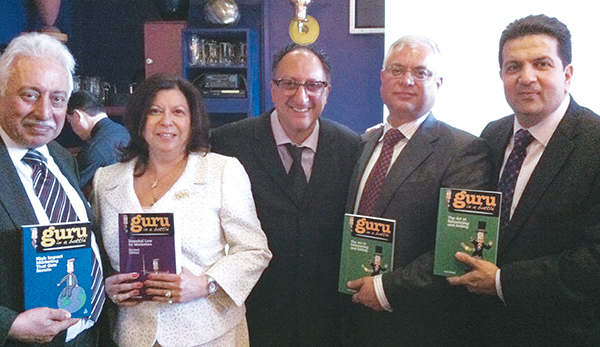
(From left): Jimmy Contractor, Shernaz Engineer, Ardi Kolah, Nauzar Manekshaw and Javid Canteenwala
For those hoping to make a successful deal at a meeting the speaker stressed, "If you’re not prepared to make the effort to listen, then don’t expect a positive outcome from the meeting. Reflective listening improves the other person’s attitude towards you and increases their willingness to concede to your point of view.” During the ‘exploring stage’ in a conversation a listener should observe when the speaker is getting excited, anxious, annoyed, impatient or animated, and watch out for change in tone, volume or pace. According to him, "55 percent of all face-to-face communication is about body language and eye contact, 38 percent is the pitch, speed, volume and tone of voice and just seven percent of communication is about the words that are used!” The world’s best communicators display confidence, competence and charisma.
Equally important is silence. When a speaker pauses, don’t attempt to fill the void, he advised, allow the speaker time to think about what to say next. "Don’t destroy the hard work you’ve put into ‘active listening’ by jumping in” unless feedback is sought.
To cultivate listening skills, Kolah recommended a five-pronged approach: ask — express interest in the other person’s point of view; mirror and match — cultivate empathy by reading the body language and responding likewise; paraphrase — to indicate to the speaker how much you have understood; prime — observe or comment on the rationality or sensitivity of the issue; share — reciprocate with corresponding amount of input and show assent or dissent in a congenial way.
The talk inspired the audience to ask questions and seek Kolah’s inputs on related issues.
◆ ◆ ◆
From the archive