
Zoroastrians Abroad
Calendar contribution
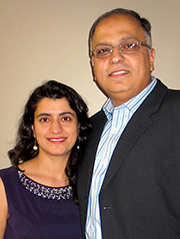
The seventh community building and fundraising calendar (April 2013-March 2014) thoughtfully and creatively designed by the Zoroastrian Association of Greater Boston Area (ZAGBA) was distributed at their Navroz function on March 23, 2013. "We call this a community building calendar since over the years this has helped people recognize and reach out to people to celebrate milestones, birthdays, anniversaries, etc. We call this a fundraising calendar since this helps to raise funds and is our largest source of revenue in addition to membership. Over the past few years ZAGBA has made a profit of about $ 2,300 a year,” writes Parastu Dubash who with husband Jamshed had conceived the project in 2007 after seeing a 365 Picture-A-Day wall calendar. "We thought it would be a great idea to have photos of family members and friends on their birthdays and then the idea evolved to make it a fundraiser for the community requesting a donation to reserve dates on the calendars,” she adds.
With a donation of $ 25, a date on the calendar is reserved to announce a birthday, wedding anniversary, navjote anniversary, Mother’s Day, in loving remembrance of… A photo and caption in the relevant slot bring alive different calendar months. As an incentive, one date slot is offered free on a donation of $ 100 for four dates. If two individuals want the same date, they can share it by contributing $ 15 each. Those whose birthdays are on the 13th of any month get a free spot! Calendars are sold for $ 15 for one or $ 40 for three.
With a donation of $ 25, a date on the calendar is reserved to announce a birthday, wedding anniversary, navjote anniversary, Mother’s Day, in loving remembrance of… A photo and caption in the relevant slot bring alive different calendar months. As an incentive, one date slot is offered free on a donation of $ 100 for four dates. If two individuals want the same date, they can share it by contributing $ 15 each. Those whose birthdays are on the 13th of any month get a free spot! Calendars are sold for $ 15 for one or $ 40 for three.
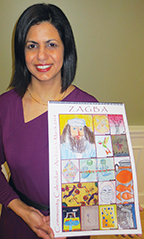
In addition to announcing prospective events of significance in the ZAGBA year, the Zarathushti, national and international holidays and observances have been specified on the calendar bearing Gregorian, Fasli and Shahehshahi dates. Information on the Zarathushti history, ethics, calendars, ceremonies plus meaningful quotes have been incorporated to make the calendars "great for gift giving.” There is blank space too on each of the dates where users can write their own schedule. The front cover usually bears a collage of ZAGBA children and photos of their artwork and the back cover is livened up with photos of community events in the preceding year. As reminds a circular to the members, "It is the funds that we raise from the calendar initiative that have helped us keep our membership fees the same for many years now, and also keep our event fees low… We encourage you to be creative and also use less well-known holidays, events and observances (i.e. from other countries, United Nations Day, Friendship Day, health related, peace related, history related dates, etc).”
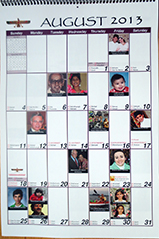
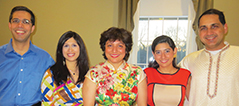
Over the years Anaheeta Mody, Tara Raman and Ferzin Engineer who have graphic design experience have contributed their creative inputs in the making of these calendars, mentions Parastu. For the information of other organizations that may wish to produce such a calendar, ZAGBA president Aspi Engineer states that they use InDesign software, the non-profit price of which is $ 300, and the retail rate about $ 1,000. "The calendar is about 60 hours of work with the first year taking a lot longer. The money raised is directly related to how many spots you can sell… Typically calendar printing costs are high and we have been lucky to find a printer who prints them for less than $ 10,” specifies Aspi. This year as also last year about 30 families participated in the ZAGBA calendar, buying 50 calendars and donating towards 120 spots. The majority donate towards two to five spots and a few families donate for 10 to 20 spots. The calendars are distributed at the Navroz function to save on mailing costs.
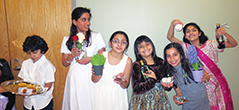
To make the laying of the Navroz Haft Seen table a meaningful exercise for the youngsters, at their Navroz get-together each child in the four to 14 age-group was tutored to approach the table with predetermined items. The child had to introduce himself/herself over the microphone and then explain the significance of the item he/she had brought for the table. They thus learnt the significance of traditional items like the white cloth, Khordeh Avesta, photo of Zarathushtra, mirror, rose water, candle, colorfully decorated egg, bowl of water with an orange in it, berries and dried fruits, Persian cookies and pastries and fresh flowers that are laid on the table. Further, they were taught the Persian names and importance of haft (seven) items beginning with the Persian letter ‘seen’ corresponding to the English ‘s’: seeb (apple), sabzeh (green sprouts), sumac (spice), seer (garlic), serkeh (vinegar), sonbol (hyacinth flower) and sekeh (coins) as also the letter sheen (corresponding to the English ‘sh’): sharab (wine), shaker (sugar), shir (milk), shireh (syrup), shahd (honey), shirini (candy) and shir-berenj (rice pudding). The children then entertained the audience by singing Chhaiyé hamé Zarathoshti and 21st March, Jamshedi Navroz is the festival of spring to the tune of O My Darling Clementine.
To make the laying of the Navroz Haft Seen table a meaningful exercise for the youngsters, at their Navroz get-together each child in the four to 14 age-group was tutored to approach the table with predetermined items. The child had to introduce himself/herself over the microphone and then explain the significance of the item he/she had brought for the table. They thus learnt the significance of traditional items like the white cloth, Khordeh Avesta, photo of Zarathushtra, mirror, rose water, candle, colorfully decorated egg, bowl of water with an orange in it, berries and dried fruits, Persian cookies and pastries and fresh flowers that are laid on the table. Further, they were taught the Persian names and importance of haft (seven) items beginning with the Persian letter ‘seen’ corresponding to the English ‘s’: seeb (apple), sabzeh (green sprouts), sumac (spice), seer (garlic), serkeh (vinegar), sonbol (hyacinth flower) and sekeh (coins) as also the letter sheen (corresponding to the English ‘sh’): sharab (wine), shaker (sugar), shir (milk), shireh (syrup), shahd (honey), shirini (candy) and shir-berenj (rice pudding). The children then entertained the audience by singing Chhaiyé hamé Zarathoshti and 21st March, Jamshedi Navroz is the festival of spring to the tune of O My Darling Clementine.
◆ ◆ ◆
From the archive