
Business
Protecting privacy
Ratan Tata, chairman of the Tata Group, filed his affidavit in the Supreme Court on January 8, 2011, stating that his writ petition filed at the end of November 2010 sought not just to protect his own right to privacy but to redress "wholesale violation of the constitutional rights of a large number of persons” by the "indiscriminate publication” of wiretap material. Tata criticized the government’s "lackadaisical” handling of the Niira Radia tapes which were leaked to and widely published in the media, leading to a storm of controversy involving top businessmen, bureaucrats, politicians and journalists.
Tata accused the government of "standing by and allowing purloined material of this kind to be freely distributed and published without taking any steps or actions to retrieve the stored material or to find out the source of the leakage.” Representing the Tatas was lawyer Ryan Karanjawala. The phones of corporate lobbyist Radia, whose PR (public relations) company Vaishnavi Corporate Communications handles the Tata group accounts, were tapped by the Income-Tax authorities from August 20-December 19, 2008 and again from May 11-July 9, 2009 on suspicion of tax evasion. Radia has also been accused of seeking to influence government policy in the matter of allocation of 2G spectrum and licenses through the controversial telecom minister A. Raja. No charges, however, have been pressed against her so far.
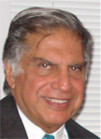
Ratan Tata: asserting fundamental rights
Tata’s affidavit also stated that there are "problems arising out of ownership of media entities by large business houses.” (Reliance Capital, a part of the Anil Ambani Group, owns 10 percent of TV Today Network of the India Today Group, as per The Economic Times of January, 10, 2011. The Rajan Raheja Group and RPG Group respectively own the magazines Outlook and Open which stirred a hornet’s nest by first publishing and sensationalizing the private conversations.) Tata stated that in almost all the leaked tapes, the contents are in the nature of loose comments or gossip about third parties. Tata had earlier said that the tapes were deliberately put in the public domain to create a smokescreen to hide what he believed was the real scam — out-of-turn allocation of spectrum and the hoarding of spectrum by important players for free…
Known normally for his low profile and reticence, Tata’s public remark in Dehra Dun in November last year also made headlines. At a public meeting he said that, despite being pioneers in the airline business in India (with Tata Airlines in the 1930s), his Group had faced great difficulties in their bid some years ago to set up an aviation venture in collaboration with Singapore Airlines. "We approached three prime ministers. But an individual (Tata did not name him) thwarted our efforts to form the airline,” the veteran industrialist was widely quoted.
Tata’s "banana republic” remark also made front page news. In his "Walk the Talk” interview with reputed journalist, The Indian Express Editor-in-Chief Shekhar Gupta, aired on NDTV 24X7 and reproduced in full by the paper in its edition of November 29, 2010, Tata had, among other things, criticized journalists and TV reporters for slipping into a morass of allegations — "the media going crazy on alleging, convicting, executing… literally character assassination. I wish the government would… have an investigation and book people who are guilty, but stop this sort of banana republic kind of attack on whoever one chooses to attack on a basis unsubstantiated even before the person has what I consider every Indian’s right — namely to be considered innocent until found guilty in a court of law, not on the street, not in this way… It’s terrible if we as a nation destroy ourselves…”
◆ ◆ ◆
From the archive