
Events & Personalities
Understanding cities
"Can I study any other city of which I am not a part or to which I do not belong but only visit?” asked architect and urban researcher Kaiwan Mehta delivering a talk titled "Not My City!” at the K. R. Cama Oriental Institute (KRCOI) on May 12, 2010. He was referring to his visit to Frankfurt and some other European cities as part of a study program.
"I hate being looked upon as a tourist,” said the slim author whose book Alice in Bhuleshwar was published last year. That’s why he dislikes carrying a camera or even a map. He believes entering a place with or without a map influences how one views a city, "collecting sights and experiences.”
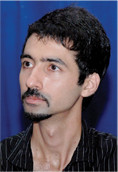
Kaiwan Mehta: urban study
He finds "a linear city” like Bombay easier to understand while metropolises like Delhi are more "difficult.” Stuttgart is a "driver’s city, a car city,” he claims. Walking in a city gives it "some kind of structure, a handle (for enhancing) memory and experiences.”
He finds literature, experience and visual sights as important tools for understanding and writing about cities. Also by fixing on a particular monument or place he is able put his finger on what the city means to him. The light in buildings helps to understand the architecture of a structure. Great monuments such as a castle/fort he viewed from his room in Stuttgart "have no use. It is only a monument,” an exercise in "professional discipline. It becomes an object of history.”
President of the KRCOI Muncherji N. M. Cama introduced Mehta while joint honorary secretary Dr Nawaz Mody mentioned that Mehta would be conducting a workshop this July at the KRCOI on "Indian aesthetics in the 20th century.”.
◆ ◆ ◆
From the archive