
Events & Personalities
Javeri judgment
In a definitive judgment in the matter of Ratty P. Javeri vs Life Insurance Corporation (LIC) dated January 2, 2009, Justice A. V. Deshpande of the Bombay City Civil Court (BCCC) has decreed that the LIC cannot terminate the appellant’s tenancy as such termination "is contrary to and in violation of Guidelines dated June 8, 2002... wherein it is categorically said that the provisions of the Public Premises (Eviction of Unauthorized Occupants) Act 1971 (PPE Act) should not be resorted to with commercial motive, or to secure vacant possession of the premises in order to accommodate their own employees, by public authorities, where the premises were occupied by original tenants, to whom the premises were let.”
Javeri, with her brother Dinshaw J. Daruvala as co-tenant, has resided in Belvedere Court on Maharshi Karve Road since her birth when her late grandmother had rented, and the joint family had occupied, the entire second floor as a single family unit, although flats No 5 and 6 were given separate numbers for technical reasons. LIC terminated Javeri’s tenancy in flat No 6 and, in 1990, slapped them with an eviction notice under the PPE Act on the ground that they required the premises to house their own officers. Over and above that, "damages” were claimed at the rate of Rs 56,000 per month from 1989.
Javeri responded with a writ petition in the Bombay High Court which, after an initial stay on proceedings before the LIC’s estate officer (EO), an LIC employee, ultimately ruled that the proceedings be conducted but no order be passed by the EO without referring the matter to the court. After being served with the inevitable order of eviction by the EO, Javeri appealed to the BCCC which insisted that she first deposit a sum of Rs 25 lakh with LIC. The High Court was again moved and this requirement was dropped. The BCCC then decided to complete the hearings and pass its order within three months.
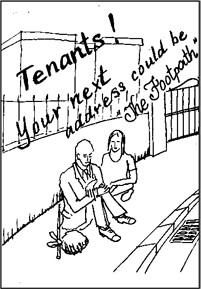
In the BCCC the LIC vehemently contended that the Guidelines issued by the Government of India regarding eviction proceedings under the PPE Act are merely advisory in character and do not confer any right on the tenant. Justice Deshpande, however, ruled: "Per contra, it is vehemently contended on behalf of the appellants that the Guidelines issued from time to time by the Central Government have statutory force and this has been categorically held by our High Court in the case of Persis Kothawala vs LIC of India and others... that the 2002 Guidelines have statutory force and those are clearly binding on the LIC and the LIC has to follow the same…
"Assuming for the moment that the dictum laid down by our High Court in Persis Kothawala vs LIC case is impliedly overruled by the apex court in the case of New India Assurance Company Limited vs Nusli Neville Wadia… still we have to consider the alleged requirement of the subject premises by... LIC on the ground of reasonableness...
"It appears that on the date of notice of terminating, there were a number of other premises belonging to the LIC lying vacant which could be allotted to such officers… The evidence shows that in adjacent building owned by the LIC at least three flats were lying vacant… and this fact has been admitted by the respondents’ own witness… In the face of this admission… the alleged need of the subject premises of the LIC was not bona fide or reasonable need. Moreover, that was also in violation of Guidelines dated June 8, 2002.”
◆ ◆ ◆
From the archive