
Religion
"Perhaps a rethink"
By barring non-Parsi spouses from gahambars the community is hastening its disintegration, states an aggrieved wife
A gahambar in Secunderabad has sparked a controversy over the exclusion of nonParsi Zoroastrian spouses from the event.
Parsiana carries letters from the aggrieved wife Padmini Bomi Patell, the president of the Zoroastrian Club, Secunderabad, Kerfegar Antia as well as opinions from Dastur (Dr) Kaikhusroo JamaspAsa, Dastur (Dr) Firoze Kotwal, Sir Jivanji J. Modi (from his treatise The Religious Ceremonies and Customs of the Parsees) and Prof Mary Boyce (from her work Zoroastrians: Their Religious Beliefs and Practices). Parsiana had requested the two High Priests for their views.
"Callous manner"
I, Padmini B. Paten, a Hindu, am married for the last 15 years to a Zoroastrian. I would like to make the Zoroastrian community aware of the callous manner in which non-Zoroastrian ladies married to Zoroastrians are treated.
Earlier this month, a Maidyarem gahambar jashan was held at the Zoroastrian Club, Secunderabad. The circular for this particular jashan ends with the statement "this being a purely religious function entry is restricted to Parsi Zoroastrians only."
It is common knowledge that we are not pennitted to attend the religious jashan ceremony.But what harm is there in allowing us to attend the gahambar which is anyway supposed to foster harmony? Anyway the food is cooked by non-Zoroastrian cooks unlike in the old days, I am informed, where only Zoroastrians cooked the gahambar food.
A written request to the president of the Zoroastrian Club, Secunderabad for an explanation has received no response in two weeks. Parsiana (June 7, 2006) carried an article" An unzoroastrian act" wherein Ervad Eruchsha B. Dastur of Poona is quoted: "When a Zoroastrian lady has married a non-Zoroastrian, she has embraced the faith of her husband,and to that degree ceases to be a Zoroastrian." Would the corollary to his statement then read "When a non-Zoroastrian lady marrieJ, a Zoroastrian, she embraces the faith of her husband, and to that degree becomes a Zoroastrian?"
Ifhis was trnly an "unzoroastrian act" this one should be tenned a downright "inhuman act" where instead of promoting integration and harmony through events such as the gahambar, the focus is on disintegration, thanks to certain members of the committee who choose to keep the blinkers on !
With the number of interfaith marriages on the rise, perhaps a rethink on permitting non-Zoroastrian spouses to attend non-religious functions will not be out ofline. Not to mention that simple gestures of inclusion that really do not threaten anyone's faith, being a huge advantage to any fast dwindling community!
PADMINI B.PATELL
Hyderabad
"No right to interfere"
At the outset I (Kerfegar Antia) would like to state that just by virtue of being married to a Zoroastrian, Padmini Paten has no right to interfere nor advise us regarding the tenets of our religion. This was precisely why we did not deem it fit to reply to her letter.
Another point to note is that Bomi Paten, husband of Padmini Pa tell, is the vice president of our Club and was very much a party to the unanimous decision taken by the managing committee on April 12, 2006 to restrict entry to Parsi Zoroastrians only, for the gahambar. The same was duly 1ninuted and the 1ninutes were confirmed on May 9, 2006. Both the meetings were very much attended by Bo1ni Patell who never recorded any dissent on the issue.
Thereafter, Bomi Pa tell requested the undersigned to invite non-Parsi spouses at least for the dinner. In response to his request I and the panthaky of our Hyderabad Agiary, Ervad Mehernosh Bharncha, who also happens to be a member of the managing committee of our Club, briefed Bomi Pa tell to his satisfaction, about the sanctity of a gahambar and the reasons for restricting entry to Parsi Zoroastrians only. I was therefore surprised to learn that Bomi Pa tell' s wife who is a non-Zoroastrian has now objected to the Club restricting entry to Parsi Zoroastrians only for the gahambar.
Gahambars are essentially community get-togethers followed by a community dinner, the idea being to bring Zoroastrians from all walks of society on one platform. Our Parsi children nowadays are more in the company of non-Parsi friends and hence the need to bring them closer to their Zoroastrian brethren. If one occasion is restricted to meeting and knowing their own co-religionists, can the intentions be regarded as malafide? Some people are very particular about family get-togethers on certain days because they realize the importance of family ties. In the same way, community gettogethers are done with the sole purpose of bonding the community.
Recently, gahambars were held at Poona, Bombay and some other places wherein also entry was restricted to "Parsi Irani" and "for all Zoroastrians" only, as published in their newspaper invites. Besides, our Zoroastrian Club holds programs and dinners often, entry to which is open to non-Parsi guests as well (Padmini Patell hardly attends them). Hence the committee felt the need to specify about the restricted entry for Parsi Zoroastrians for the gahambar dinner. If the entry to one program is re
stricted out of IO programs in a year, it should not be a matter for creating such a ruckus. Padmini Patell appears to be the only one making such a hue and cry, which she did even in the past when entry to gahambars was restricted to Parsi Zoroastrians only. If one cannot view things in the proper perspective, one can turn an ordinary situation into a problematic one. If one has a tendency to find fault in every word and trouble in every nook, life becomes miserable for them and for the world.
With our response as aforesaid, we are treating this issue as closed from our end.
Dastur JamaspAsa

He is perfectly justified. We agree with the views of the president of the Club. We cannot meddle ...
Dastur Kotwal
According to tradition, Prophet Zarathushtra himself founded the celebratory seasonal feasts of obligation which later came to be known as gahambars. Each of the six festivals are linked to the six creations of Ahura Mazda, the Lord of Wisdom. The creations are the sky, water, earth, plants, animals and man. All six gahambars are dedicated to AhuraMazda. For celebrating the gahambar, the soul of a Zoroastrian receives merit in the spiritual world. Besides seasonal gahambars there are also endowed gahambars which a pious Parsi Zoroastrian may initiate in memory of a dear one.
The word gahambar has a variety of meanings which include "to assemble with one another in a work of merit," "a time for storing good deeds," "the period for receiving merit," or "to assemble at one place at one time." During this time it is obligatory for the Mazda worshipping Zoroastrians to pray and show gratitude to Ahura Mazda for His bounties. Hence a gahambar is always celebrated with a jashan followed by a community lunch or dinner partaken by Parsi Zoroastrians with due care and in a state of ritual purity. Furthermore, it is also seen to be an act of merit to have a stum ritual performed in memory of the righteous farohars before eating the specially prepared food during the gahambar celebration. Additionally it is believed that the partaking of food serves to strengthen the feelings offellowship within the community as gahambars are seen to be solemnly observed communal feast days.
In fact, the prayer (Afrinagan) for the gahambar jashan enjoins Mazdayasnis to make an offering of a fat sheep, some alcoholic liquor and some dry logs of wood (kathi) during the gahambar festival. In this Afrinagan prayer the term Mazdayasni is used seven times and the Mazda worshippers are warned of the punishment which would be meted out to them for the non-performance of this feast of obligation.
Thus, in a gahambar, the jashan and the partaking of the celebratory meal are inextricably linked to the religious life of a Mazdayasni. Therefore, participating in the feast of obligation (gahambar) is restricted to the Parsi Zoroastrian com
munity, exclusively, as the theology of the gahambar cannot be·transposed onto a non-Zoroastrian paradigm.
In my view, it is unbecoming ofa nonZoroastrian to encroach upon the spiritual rights and religious traditions of the Parsi community which continues to uphold its rich and time tested beliefs and practices within the religious mosaic of India.
The religious sentiments of the Parsi Zoroastrian community must be respected by non-Zoroastrians at all times in a live and let live manner, as the Parsi Zoroastrians have always done in India, for over a thousand years.
May wiser counsel prevail in order not to make an issue of a non-issue.
Prof Mary Boyce

In the latter half of the (19th) century, after the reformists had started girls' schools, women gradually began to take part also in the public life of the community, and to attend what had previously been wholly male functions, such as the gahambarfeasts. By then, however, these feasts, which for so many centuries had been a means of bringing rich and poor together, were no longer, in Bombay, an occasion for all Parsis of one locality to forgather. Their houses there were too scattered, and the rich had adopted foreign ways, and were no longer ready to sit at one cloth with the poor. So the ancient custom, though still observed, had degenerated there more or less into club or social dinners, though still with a religious element.
Sir Jivanji J. Modi
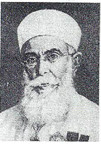
The gahambars are generally accompanied with solemn feasts, wherein members of the family, or residents of a street, or a town participate... There may be public gahambars, celebrated by the members of a family or by the inhabitants of a particular street in a town or by those of a particular village or town. All may participate in these public gahambars. If one can afford, he may pay his mite, in money or in kind ... Universal brotherhood, which we often hear spoken of, was one of the principal objects aimed at in the public gahambars. The rich and the poor - rich and poor not only in wealth but in intellectual knowledge-of the town were expected to meet together and to learn from each other's company what was best in it.
The editors reply
Though Modi talks of the gahambar being a family affair, Parsi women were not permitted to attend till the mid-19th century. We are now in the 21st century. In Bombay one out of three Parsis marries outside his or her faith. Elsewhere the number of interfaith marriages is much higher. If customs changed in the past, why can they not be adapted to present realities?
◆ ◆ ◆
From the archive