
Comment
“More institutions than required”
The community’s dwindling numbers pose a threat to the survival of Parsi institutions in Surat
Ours is a very old Panchayat catering to the various needs of Parsis. In the past it was said with some pride that the Surat Parsi Panchayat (SPP) starts its activities with a maternity hospital and ends with the Towers of Silence (the biggest in the entire world). For the betterment and general amelioration of community members we run several schools, a general hospital, infirmary, orphanage for boys, orphanage for girls, industrial institute for women, and offer residential facilities, funds to help the needy and deserving at various stages of life, scholarships for education in and out of the country.
When several of these institutions were started in the past there were a good number of Parsis here. Besides, they used to reside mostly in puras or paras, like Nanpura, Rustompura, etc. These paras resembled modern Parsi colonies with the exception that only one family used to reside in one big house and that too mostly of two stories. As Surat made tremendous progress in various directions the cosmopolitan population increased by leaps and bounds, whilst the Parsi population lessened. We have 3,500 Parsis — old and young — at present. As the general population of the city rose to about 30 lakhs, the limits of the city were extended and today New Surat is a fine city competing with good cities in the country. Several Parsis have gone to reside in this new area and the process is sure to continue. Our communal institutions and our prominent places of worship are mostly in old Surat. The Parsi paras are now Parsi in name only, mostly populated by non-Parsis, the majority being Muslims. This has adversely affected our Gujarati medium schools which are run on cosmopolitan lines.
Only our schools are run on a cosmopolitan basis. Even at this stage there are a good number of students who attend them but institutions like hospitals and orphanages (which are boarding schools) have a far lesser number of beneficiaries than in the past. Earlier we had about 180 inmates in the boys’ orphanage. Today the number is less than 50. The same is the case with the girls’ orphanage. It seems there are more institutions of the same kind than required under the present circumstances. Several years back when there was a meeting of prominent Parsi leaders and workers at Gholvad to think about starting two new rural homes for girls in Gujarat our Dr Ratan Marshall had pointed out that as the SPP had just started the Nariman Girls Orphanage we should wait and watch whether there was a genuine need for starting two new institutions working in the same direction in places so very near to one another. However, the Jehangir Rural Home for Girls at Gholvad and the Choksi Home for Girls at Navsari were started with the result that none of the three institutions ever got the number required to run the same efficiently. Thereafter the rural homes for Parsi boys and girls at Gholvad were closed down and we hear in the beginning of the new academic year the institution at Navsari will also stop working.
Originally the idea was to provide facilities of education for boys and girls residing in the distant villages, especially of South Gujarat, but with the passage of time so many Parsis left the villages and settled in cities. Additionally school facilities were also provided in the villages by the authorities and social service institutions. In the present state it appears that it will not be possible to get a sufficient number of boys and girls for our institutions if they are to be run for Parsis only. Besides Poona, Bombay, Navsari and Surat there are such institutions — boarding schools — at Khandala and Nasik too managed by Parsi trusts, and the institutions at Khandala and Nasik are made cosmopolitan, keeping several seats reserved for Parsi boys and girls.
The dwindling number of Parsis on one side and more institutions than required looking to the needs of the community at present has created a critical situation for infirmaries too. Our Nariman Home and Infirmary for the disabled, decrepit and the aged was the first of its type for Parsis. Its object appealed to the community and it became a very popular institution. People gave liberal donations and new wards were opened to accommodate those on the waiting list. The popularity of the institution drew so much attention that more such places were started especially for the old and senior citizens as they are termed in the new century. Besides, wards for the old were opened in some hospitals and the sanatoria once treating tuberculosis patients were also converted into such homes for invalids. In days to come there may be a home for the aged — ghardanu ghar — wherever there is a sizable Parsi population. This situation has adversely affected our Nariman Home. In the past we had over 100 inmates accommodated in several wards in three buildings, with a waiting list. At present the number remains between 45 and 50 and as a result wards and beds are lying vacant.
A similar situation has arisen with our Parsi General and Maternity Hospitals. Here this has happened not due to more hospitals for the community members but due to many new cosmopolitan hospitals and nursing homes having opened in this fast advancing metropolis and so many new doctors with high qualifications having started practice. Surat had one medical college in the past, at present there are two and a third one is in the picture.
There are hardly 25 births a year in the local Parsi community and as the Parsi population now resides at far-off places you cannot expect all ladies to come to the Parsi Maternity Hospital. Some may have a preference for a doctor not attached to the Hospital. But even if all the 25 come to the Parsi institution, the monthly average would be only two. How then is it feasible to run a maternity home for two every month? For several months there is often no lady and no child born in this institution.
Under the above circumstances we found it essential to make our Hospitals cosmopolitan, whilst carefully looking after the needs, comforts and interests of the community members. We approached the charity commissioner who supported us but for such a change, the consent of the competent court was essential. The suit was opposed. The matter is before the court for the last several years and the institutions are working in heavy deficits for a ridiculously low number of Parsi inmates. It is interesting to note that in Navsari, the Dabu and Mehta Hospitals, originally meant for Parsis only, are now catering to the medical needs of all communities, with financial relief and benefits to Parsi patients. The Parsi Hospitals of Surat function in old buildings which require a lot of major repairs. Much is already spent, a lot more will be spent but the number of inmates who get benefits remains negligible. The old lift also requires to be replaced at substantial cost.
An old Parsi Panchayat like that of Surat has so many useful institutions but because of the community’s dwindling numbers they have not been able to retain their old utility. Sometimes it is felt some institutions should stop functioning or be made cosmopolitan or in the original objects of the trusts some more be added looking to the changed times and circumstances.
Parsi punchayets and charity organizations which are working in this direction should give careful thought to this matter at an early date. This is a field where only persons who have personal experience and knowledge should express themselves with authority in the light of the difficulties they may be experiencing.
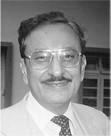
President of the Surat Parsi Panchayat and vice president of the Federation of Parsi Zoroastrian Anjumans of India Dr Sam S. Bhacca is closely connected with several religious and community institutions. A popular medical practitioner in Surat, Bhacca also assists the leprosy and tuberculosis hospitals.
◆ ◆ ◆
From the archive