
Observation
An avoidable divide
What are the issues that divide us and who can be labelled orthodox or reformist? asks the author
It’s not only avoidable, but desperately needs to be avoided — this divide that’s threatening to rip our minuscule community right down the middle. The irony is that this danger is fuelled by the very persons who most devotedly espouse the cause of Zoroastrianism; who have the well-being and succor of their co-religionists at heart, and who are vitally concerned about the perpetuation of the Zoroastrian religion and the Parsi way of life. It is passionate espousal that is causing so much sound and fury — indifference would have resulted in shrugs and silence.
In the battle royal now being waged between some Zarathushtis with one idea of Zoroastrianism, versus some other Zarathushtis with a rather different idea of Zoroastrianism, the faith itself is likely to be the casualty.
We, this mutthi bhar tolo (handful of people), are tearing each other apart because we care...and care deeply! Can’t we care without causing schisms? Can we afford factions and sects and divisions within our small numbers? Should we risk physical fragmentation because we refuse to accommodate ideological differences within a demographic group which is almost 100 percent literate, mostly well educated, by and large reasonably well-to-do with many among us (let us admit) individualistic to the edge of eccentricity?
We are today in danger of perceiving our major strengths as weaknesses: our liberalism, our large-heartedness, our broadmindedness, our eschewing of fundamentalism of any kind. A questing, probing intelligence, a robust sense of humor, simple faith, basic integrity and a decorous code of conduct have ensured for us a certain cachet in this multicultural melting pot of the country of our refuge. Are we in danger of losing it all? Over issues that ought never to have exacerbated to this extent?
The two major issues of contention, not-so-gradually cleaving the community into two factions of the ‘orthodox’ and the ‘reformist,’ evidently are: intermarriage and its attendant ramifications, and the method of disposal of our dead. Another area of concern is our dwindling numbers which appears to be exercising the so-called orthodox and the so-called reformists almost equally.
I say ‘so-called,’ because these nomenclatures are apt to be misleading. Who really is an ‘orthodox’ person, and who can truly be categorized ‘reformist?’ It is not sufficient to say that anyone who believes in the traditional doctrines and tarikats of Zoroastrianism is ‘orthodox,’ and one who does not, should be labelled ‘reformist.’ The categorization is not so simple or clear cut. A person may have no objection to inter-caste marriages, but may be adamant about dakhmenashini being the only method of disposal of the dead, and the vice versa. Also, a person may have very rigid views against inter-caste marriages, and against any system but dakhmenashini, but may be resident abroad, and may be compelled to have himself/herself or his/her loved ones buried or cremated. Is such person ‘un-Zoroastrian’ and ‘irreligious?’ Or is he/she permitted to bend doctrinal precepts at the altar of practical convenience and expediency, which in fact has been the case for decades?
We are told that it is irreligious and un-Zoroastrian to follow any method other than dakhmenashini for the disposal of the dead in such places which have dakhmas. We are also told that dakhmenashini is the only system recognized in Zoroastrianism for the disposal of the dead. We cannot have a doctrinal absolute qualified by a temporal condition. If a method is irreligious or un-Zoroastrian, it is so for all, unconditionally. It then behoves all Parsi Zoroastrians to reside only in areas which have dakhmas!
Dakhmenashini as a system has to be viewed holistically, with all its components in place. Apart from the well, duly consecrated, we are told the other main prerequisites of the system are: vultures or other scavengers which strip the flesh, and the strong rays of the sun which help the process of dehydration and decomposition.
It is an accepted fact that in Bombay, in the Doongerwadi grounds, there are no vultures left. The sun’s rays are fine, but how much sun do the dakhmas get? What about the heavy monsoon season experienced by Bombay for four-five months in a year?
Yes, one can understand — the Doongerwadi lands are in question. Dare I suggest, however, that we are in greater danger of losing lands by quarrelling amongst ourselves and dragging matters to court, than we would be, were we to come to some consensus amicably and implement the decisions without any ado? After all, several good, devout Zoroastrians have been exercising the freedom of choice for years — merely by choosing their place of residence!
As far as the aviary project is concerned, how natural and ethical is it to cage huge wild birds (Ahura Mazda’s creatures, surely!), force them to live and breed in captivity, deny to them forever their inborn right to soar the skies, slaughter other animals to feed them and then train them to feed off a diet of dead human carcasses so that our dead can be disposed of by them? The mind boggles at the thought — breed birds, not to perpetuate the species, but only so that our dead bodies can be eaten by them! Natural? Ethical? Religious? Zoroastrian? Is it?
As far as intermarriages are concerned, is it required that one should be false to one’s heart, in order to be true to one’s faith? Does an otherwise devout Zoroastrian become any less so, because he/she falls in love with and marries another human being who may not be born a Zoroastrian? A person may be the model of virtue; but he/she becomes anathema in the eyes of some, if he/she marries a non-Parsi — an ‘outcaste!’ What is of particularly grave concern is the way we treat the children of such ‘mixed marriages,’ an example being exposed by the November issue of Parsiana ("The Nagpur incident”). Whatever the learned priest may have meant, surely, he could have refrained from using a word which even a child knows is a pejorative! Surely no religion requires its innocent children to be so traumatized because of the perceived sins of their parents: that of marrying a human being of a different faith (surely another of God’s creatures)! And this, when there is still some doubt as to whether or not Zoroastrianism ever permitted/encouraged proselytism!
Can’t we, for God’s sake, do away with dogmas and fatwas, and follow our most basic tenets: good thoughts, good words, good deeds?
Let us not forget the horrors of religious persecution in other faiths. And if it comes to that, study the Vendidad in its entirety. Are we sure we want it followed to the ultimate degree, including all the punishments prescribed?
Let us not fragment ourselves over what may or may not be the true religious diktat, the real spiritual truth, the essence of pure faith. Apart from problems of translation and interpretation, several of our holy books have been lost or destroyed. (Ironically, we have largely depended upon ‘out-caste’ scholars for interpretation of our holy books!)
As for the expressed danger that we may lose our identity, we are in far greater danger of that if we are constantly at each other’s throats, snarling over our differences instead of sorting them out sensibly!
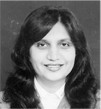
A practising lawyer in the Bombay High Court, Armin Wandrewala has authored two books, The Turning, a crime novel which has also been translated into German, and Alone...In The Valley Of The Gods, a true pictorial account of her treks and travels in the Himalayas.
◆ ◆ ◆
From the archive